SSRI Antidepressants & Serotonin Myth
Overview
In 1987, Eli Lilly introduced Prozac, and depression changed forever. Not the disease itself — that remained what it had always been. What changed was how America talked about it. Depression was no longer a moral failing, a character weakness, or something you should just snap out of. It was a chemical imbalance. Your brain wasn’t producing enough serotonin. Prozac fixed the chemistry. It was simple, it was scientific, and it was on the commercials between the weather and the sports.
By 2020, approximately one in eight Americans over the age of 12 was taking an antidepressant. The SSRI market was worth over $15 billion annually. Tens of millions of people took their pills every morning with the same unquestioning confidence they’d bring to taking aspirin for a headache. The science, they’d been told, was settled.
Then the science unsettled itself.
In 2022, a comprehensive review published in Molecular Psychiatry — one of the field’s most prestigious journals — concluded that there was no consistent evidence linking depression to low serotonin levels. The “chemical imbalance” theory, the foundation of a multi-billion-dollar industry and the most widely repeated explanation for depression in modern medicine, turned out to be somewhere between an oversimplification and a marketing slogan.
The SSRI controversy sits in one of the most uncomfortable zones in modern medicine: a place where documented pharmaceutical misconduct, legitimate scientific debate, and the deeply personal experience of mental illness all collide. The pharmaceutical companies did suppress negative trial data. The chemical imbalance narrative was pushed harder by marketing departments than by science. But SSRIs also genuinely help some people — particularly those with severe depression. Untangling what’s real from what’s marketing, and what’s legitimate criticism from what’s dangerous misinformation, requires more nuance than either side usually offers.
The Chemical Imbalance Story
How It Was Sold
The serotonin hypothesis of depression emerged in the 1960s, when researchers noticed that drugs affecting serotonin levels seemed to influence mood. The hypothesis was always more tentative than the public was led to believe — a working theory that might explain some aspects of depression, not a proven mechanism.
But tentative hypotheses don’t sell pills.
When SSRIs (Selective Serotonin Reuptake Inhibitors) arrived in the late 1980s, pharmaceutical companies needed a simple story to explain why millions of people should take them. The “chemical imbalance” narrative was perfect: you’re depressed because your brain chemistry is off. SSRIs correct the chemistry. It’s just like taking insulin for diabetes.
The analogy to diabetes was particularly effective — and particularly misleading. Type 1 diabetes involves a measurable, documented deficiency of a specific hormone (insulin). Depression involves no such measurable deficiency. There is no blood test for serotonin deficiency. There is no diagnostic marker that shows a depressed person has “low serotonin.” The comparison sounded scientific but was fundamentally false.
Pharmaceutical companies promoted the chemical imbalance narrative through:
- Direct-to-consumer advertising: The United States (one of only two countries that allow it) saw a flood of TV commercials depicting sad little animated characters whose serotonin levels were out of balance
- Physician marketing: Sales representatives presented SSRIs as correcting a specific chemical problem
- Patient education materials: Pamphlets and websites funded by pharmaceutical companies explained depression as a brain chemistry issue
The narrative worked brilliantly. Stigma around depression decreased (a genuine good). Prescriptions for SSRIs soared (a genuine financial bonanza for pharmaceutical companies). And the public came to believe something that the scientific evidence didn’t actually support.
The Moncrieff Review (2022)
In July 2022, Joanna Moncrieff, a professor of psychiatry at University College London, published an umbrella review in Molecular Psychiatry that examined the entire body of evidence for the serotonin hypothesis. The review looked at multiple lines of research — serotonin levels in blood and cerebrospinal fluid, serotonin receptor studies, serotonin depletion experiments, serotonin transporter gene studies, and more.
The conclusion: “There is no support for the hypothesis that depression is caused by lowered serotonin activity or concentrations.”
The review didn’t claim that serotonin plays no role in depression — brain chemistry is complex, and serotonin may be involved in ways not captured by the simple “low serotonin” model. What it demonstrated was that the specific narrative sold to the public — that depressed people have low serotonin and SSRIs fix this — was not supported by evidence.
The response from the psychiatric establishment was mixed. Some psychiatrists argued that the review was attacking a straw man — that no serious researcher had believed the simple chemical imbalance model for years. This was technically true for researchers but spectacularly false for the public, which had been told the chemical imbalance story for three decades.
The Efficacy Debate
Irving Kirsch and the Placebo Problem
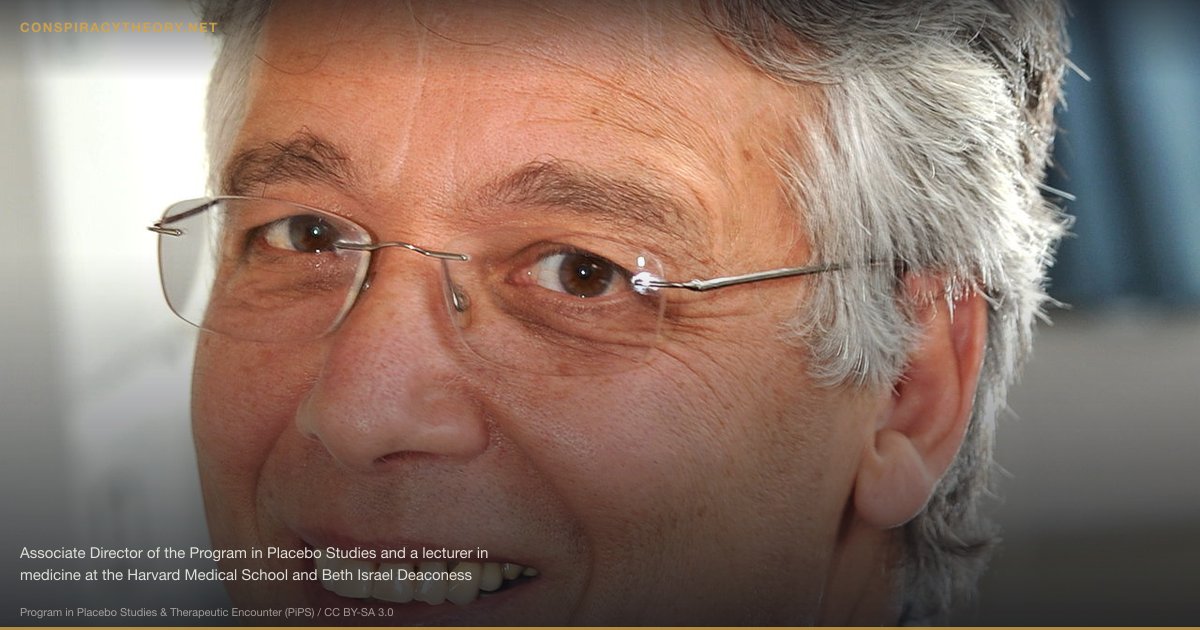
The most incendiary challenge to SSRIs came from Irving Kirsch, a psychologist at Harvard Medical School who used the Freedom of Information Act to obtain FDA data on all clinical trials submitted for SSRI approval — including the unpublished ones.
Kirsch’s findings, published in 2008 and elaborated in his book The Emperor’s New Drugs, were startling:
- For mild-to-moderate depression, the difference between SSRIs and placebo was approximately 1.8 points on the Hamilton Depression Rating Scale — a difference below the threshold of 3 points that the National Institute for Clinical Excellence considers “clinically significant”
- The placebo response in depression trials was enormous — typically 30-40% of patients improved on sugar pills
- The drug effect was real but small, and most of the apparent benefit came from the placebo response
- For severe depression, SSRIs showed a larger benefit — but this appeared to be driven by a reduced placebo response in severe cases rather than an increased drug effect
Kirsch’s analysis was controversial but methodologically sound. It wasn’t that SSRIs didn’t work at all — they produced a real, measurable effect. It was that the effect was much smaller than the public had been led to believe, particularly for the mild-to-moderate depression that accounted for the majority of prescriptions.
The Publication Bias
Kirsch’s most damaging finding was the publication bias. Of 74 FDA-registered SSRI trials, 37 with positive results were published, while trials with negative or ambiguous results were either buried (11 trials) or published in ways that spun the results positively (11 trials).
This wasn’t Kirsch’s discovery alone. In 2008, Erick Turner published a study in the New England Journal of Medicine documenting the same pattern. The selective publication created a body of scientific literature that dramatically overstated SSRI efficacy — because the literature only included the studies that made the drugs look good.
The most egregious case involved GlaxoSmithKline’s paroxetine (Paxil/Seroxat). GSK concealed data from Study 329, which showed that paroxetine was ineffective for adolescent depression and was associated with increased suicidal ideation. The suppressed data wasn’t discovered until 2004, when it emerged through litigation. GSK paid $3 billion in 2012 to settle fraud charges related to Paxil and other drugs — the largest healthcare fraud settlement in U.S. history at that time.
The Cipriani Meta-Analysis (2018)
In 2018, Andrea Cipriani and colleagues published a massive meta-analysis in The Lancet covering 522 trials and 116,477 participants. The study found that all 21 antidepressants studied were statistically more effective than placebo. This was widely reported as settling the debate in favor of SSRIs.
But the details were more nuanced than the headlines. The average effect sizes were modest. The studies included mostly short-term trials (8 weeks), while most people take antidepressants for months or years. Industry-funded trials showed larger effects than independent trials. And the analysis couldn’t fully account for the unblinding problem: because SSRIs produce noticeable side effects, trial participants can often guess whether they’re on the drug or the placebo, which inflates the apparent drug effect.
The Real Picture
What’s Confirmed
- The chemical imbalance narrative was a marketing story, not established science. Pharmaceutical companies promoted an oversimplified model that is not supported by the evidence.
- Publication bias is real and documented. Companies selectively published favorable results and suppressed unfavorable ones.
- SSRIs have modest efficacy for mild-to-moderate depression, performing only marginally better than placebo.
- Withdrawal effects are real and were minimized by manufacturers. Discontinuation syndrome can include dizziness, nausea, anxiety, “brain zaps,” and mood disturbances — symptoms that were downplayed or denied by pharmaceutical companies for years.
What’s Complicated
- SSRIs do appear to help severe depression more substantially.
- Individual responses vary enormously. Some people experience dramatic improvement; others experience nothing. Current science cannot predict who will respond.
- The placebo effect is itself therapeutic. If 30-40% of people improve on placebo, and 50% improve on SSRIs, a substantial number of people are getting better regardless — and the act of taking a pill, seeing a doctor, and believing treatment is working has real neurobiological effects.
- The alternative may not be better. Psychotherapy (particularly CBT) is effective for depression, but it’s expensive, requires trained therapists, and has its own access problems. For many patients, an SSRI prescription is the treatment they can actually get.
What’s Dangerous
The SSRI debate has been weaponized by anti-psychiatry movements and conspiracy theorists who use the legitimate criticisms to argue that all psychiatric medication is a fraud — or worse, that mental illness itself isn’t real. This is irresponsible. Depression is a serious, sometimes fatal condition. The appropriate response to pharmaceutical industry misconduct is better research, better regulation, and more honest communication — not telling depressed people to throw away their medication.
Timeline
| Date | Event |
|---|---|
| 1960s | Serotonin hypothesis of depression proposed |
| 1987 | Prozac (fluoxetine) approved by FDA; SSRI era begins |
| 1990s | ”Chemical imbalance” narrative dominates pharmaceutical marketing |
| 1997 | FDA loosens rules on direct-to-consumer drug advertising |
| 2001 | GlaxoSmithKline Study 329 on Paxil in adolescents; data suppressed |
| 2004 | FDA adds black box warning about suicidality in adolescents on SSRIs |
| 2008 | Kirsch publishes FOIA analysis showing SSRIs barely beat placebo |
| 2008 | Turner publishes NEJM study documenting SSRI publication bias |
| 2012 | GSK pays $3 billion fraud settlement (Paxil, Wellbutrin, Avandia) |
| 2018 | Cipriani meta-analysis finds all antidepressants beat placebo |
| 2022 | Moncrieff umbrella review finds no support for serotonin hypothesis |
Sources & Further Reading
- Kirsch, Irving. The Emperor’s New Drugs: Exploding the Antidepressant Myth. Basic Books, 2010.
- Moncrieff, Joanna, et al. “The Serotonin Theory of Depression: A Systematic Umbrella Review.” Molecular Psychiatry, 2022.
- Turner, Erick H., et al. “Selective Publication of Antidepressant Trials and Its Influence on Apparent Efficacy.” New England Journal of Medicine, 2008.
- Cipriani, Andrea, et al. “Comparative Efficacy and Acceptability of 21 Antidepressant Drugs.” The Lancet, 2018.
- Whitaker, Robert. Anatomy of an Epidemic. Crown, 2010.
- Goldacre, Ben. Bad Pharma. Faber & Faber, 2012.
Related Theories
- Psychiatric Overdiagnosis — The broader critique of psychiatric expansion
- Big Pharma Conspiracy — Pharmaceutical industry misconduct
- Pharmaceutical Fraud — Documented cases of drug company fraud
Frequently Asked Questions
Is the chemical imbalance theory of depression real?
Do SSRIs actually work?
Did pharmaceutical companies hide negative trial data?
Should people stop taking antidepressants?

Infographic
Share this visual summary. Right-click to save.
