Pentagon Papers — Government Vietnam Deception
Overview
On the morning of June 13, 1971, readers of the New York Times encountered a dense, unglamorous headline on the front page: “Vietnam Archive: Pentagon Study Traces 3 Decades of Growing U.S. Involvement.” Beneath it was the first installment of what would become the most consequential leak in American history — 7,000 pages of classified documents proving that the United States government had lied about virtually every aspect of the Vietnam War, systematically and deliberately, for over two decades.
The documents revealed what antiwar protesters had long suspected but couldn’t prove: that four presidents knew the war was unwinnable and escalated anyway. That casualty estimates were manipulated. That bombing campaigns were expanded in secret. That Congress was deceived about the scope and purpose of military operations. That the Gulf of Tonkin incident — the event used to justify full-scale war — was a manufactured pretext.
The Pentagon Papers didn’t end the Vietnam War. But they ended any pretense that the government’s account of the war could be trusted. They triggered a constitutional crisis, a landmark Supreme Court case, and a chain of events that led directly to Watergate and the resignation of a president. And they established, as confirmed fact rather than conspiracy theory, that the American government was capable of sustained, systematic deception on a massive scale.
The Study
McNamara’s Secret History
In June 1967, Secretary of Defense Robert McNamara — the architect of U.S. Vietnam policy under Kennedy and Johnson, the man who had personally overseen the escalation — did something remarkable. He commissioned a comprehensive, classified study of how the United States had gotten into Vietnam.
McNamara was, by this point, privately convinced that the war was a catastrophic mistake. He couldn’t say this publicly — he served at the pleasure of President Johnson, who had staked his presidency on the war. But he could create a record. The study would be the most thorough internal history of a policy failure ever assembled.
He tasked 36 analysts — military officers, diplomats, and civilian researchers from the Department of Defense and the RAND Corporation — with reviewing every classified document related to Vietnam from 1945 to 1967. The project took 18 months. The result was 47 volumes, approximately 7,000 pages, containing 3,000 pages of analysis and 4,000 pages of original government documents — cables, memoranda, National Security Council papers, and presidential orders.
The study was classified Top Secret — Sensitive. Only 15 copies were produced. McNamara left the Pentagon in February 1968 (pushed out by Johnson after their relationship deteriorated over the war) without ever seeing the completed study.
What the Papers Showed
The Pentagon Papers documented a pattern of deception spanning four administrations:
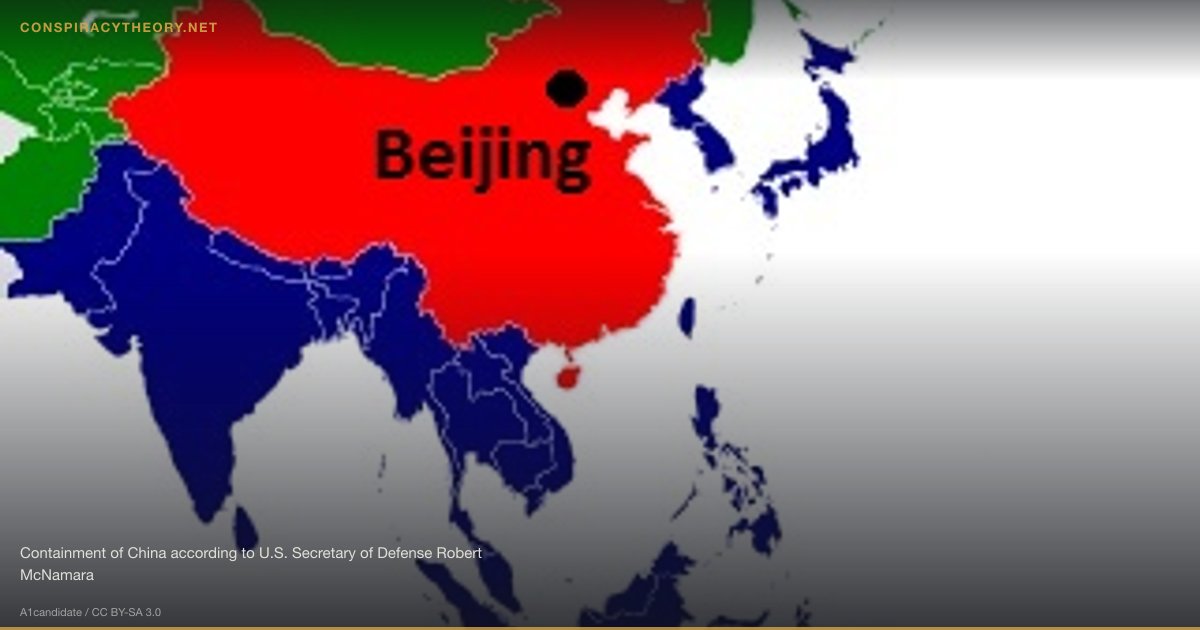
Truman (1945-1953): The U.S. began supporting France’s colonial war in Indochina not because of any commitment to Vietnamese self-determination — despite publicly invoking that principle — but as a Cold War strategy to contain China after Mao’s 1949 victory. By 1954, the U.S. was paying 80% of France’s war costs.
Eisenhower (1954-1961): After France’s defeat at Dien Bien Phu, the 1954 Geneva Accords called for elections to reunify Vietnam. The Eisenhower administration actively undermined the accords, knowing that Ho Chi Minh would win a national election. The U.S. installed Ngo Dinh Diem as president of South Vietnam and began building a client state — while publicly supporting the Geneva framework.
Kennedy (1961-1963): The papers revealed that Kennedy’s administration actively participated in planning the November 1963 coup against Diem — a coup that ended in Diem’s assassination. The administration had been publicly expressing support for Diem while privately coordinating his overthrow. Kennedy also dramatically expanded the number of military “advisors” in Vietnam while maintaining the fiction that the U.S. was not engaged in combat.
Johnson (1963-1968): The most damning revelations concerned the Johnson administration. The papers showed that Johnson had decided to escalate the war well before the 1964 election — in which he ran as the peace candidate against Barry Goldwater’s hawkishness. The administration planned bombing campaigns against North Vietnam months before the Gulf of Tonkin incident provided the official justification. The Tonkin Gulf Resolution — which Johnson used as his legal authority for the war — was drafted before the alleged incident occurred.
The papers also documented the systematic manipulation of information provided to Congress and the public. Casualty figures were understated. Enemy strength was underestimated. The prospects for military success were wildly overstated. Officials who expressed pessimism were sidelined or silenced.
The Leak
Daniel Ellsberg
Daniel Ellsberg was, on paper, the last person you’d expect to become America’s most famous whistleblower. A Harvard Ph.D. in economics, a former Marine company commander who had volunteered for combat in Vietnam, a RAND Corporation analyst with top-secret clearance — Ellsberg was the definition of an establishment figure. He had helped write the Pentagon Papers.
But Ellsberg’s time in Vietnam had changed him. He’d spent two years in-country in the mid-1960s, traveling to combat zones and observing the gap between what officials said in Saigon and what was happening in the field. By 1969, he had concluded that the war was not just unwinnable but immoral — and that the pattern of deception documented in the Pentagon Papers was itself a form of violence against democratic governance.
Ellsberg began photocopying the papers in October 1969. The process was agonizingly slow — he had to copy 7,000 pages on a Xerox machine, working nights and weekends, often with the help of his children, who cut off the “Top Secret” markings while he fed pages through the copier. The complete copying took months.
Trying to Work Within the System
Ellsberg didn’t go straight to the press. He first approached members of Congress, hoping that a senator or representative would read the papers into the congressional record — where they would be protected by the Speech or Debate Clause of the Constitution. He gave copies to Senator William Fulbright, chairman of the Foreign Relations Committee, who had already turned against the war. Fulbright did nothing. He approached Senator George McGovern and Representative Pete McCloskey. Nothing. Congress wouldn’t touch the documents.
After more than a year of trying to work through official channels, Ellsberg went to the New York Times.
Publication
Times reporter Neil Sheehan, a Vietnam veteran himself, received the documents and spent months with a team of reporters and editors analyzing them in secret. On June 13, 1971, the paper began publishing excerpts.
The initial reaction was oddly muted — the first installment was dense and academic, and it took a day for the story to build momentum. But by the second and third installments, the impact was seismic. Here was the government’s own internal history, written by the government’s own analysts, confirming that the war had been built on a foundation of lies.
The Government Response
Nixon’s Fury
Here’s the irony of the Pentagon Papers: they didn’t cover the Nixon administration. The study ended in 1967, two years before Nixon took office. Nixon could have let the story play out, watched his predecessors take the blame, and emerged looking clean.
He didn’t. Nixon was obsessed with leaks and terrified that Ellsberg might have other classified documents — including ones that covered his own secret operations, such as the bombing of Cambodia. Henry Kissinger reportedly told Nixon that Ellsberg was “the most dangerous man in America.” Nixon’s response set in motion a chain of events that would destroy his presidency.
The Injunction
Attorney General John Mitchell obtained a federal injunction against the New York Times, halting publication after three installments. It was the first time in American history that the federal government had imposed prior restraint on a major newspaper — preventing publication rather than punishing it after the fact.
Ellsberg, meanwhile, gave copies to the Washington Post, which began publishing on June 18. The government obtained an injunction against the Post as well. Ellsberg then gave copies to the Boston Globe, the Chicago Sun-Times, the St. Louis Post-Dispatch, and a dozen other papers. The government couldn’t plug the dam fast enough.
New York Times v. United States
The case reached the Supreme Court in record time — argued on June 26, decided on June 30, 1971. In a 6-3 ruling, the Court held that the government had not met the “heavy presumption against [the] constitutional validity” of prior restraint. The papers could be published.
Justice Hugo Black’s concurrence has become one of the most quoted passages in First Amendment law:
“The press was to serve the governed, not the governors. The Government’s power to censor the press was abolished so that the press would remain forever free to censure the Government. The press was protected so that it could bare the secrets of government and inform the people. Only a free and unrestrained press can effectively expose deception in government.”
Justice Potter Stewart wrote that “the only effective restraint upon executive policy and power in the areas of national defense and international affairs may lie in an enlightened citizenry.”
The government lost. But Nixon wasn’t finished.
The Aftermath
The Plumbers
Nixon’s fury over the Pentagon Papers leak led directly to the creation of the White House Special Investigations Unit — known as “the Plumbers” because their job was to stop leaks. The Plumbers’ first operation, in September 1971, was to break into the office of Ellsberg’s psychiatrist, Dr. Lewis Fielding, looking for material to discredit Ellsberg.
They found nothing useful. But the break-in — illegal, personally authorized by Nixon aide John Ehrlichman — established the pattern that would define the Nixon presidency: the willingness to use criminal means to punish perceived enemies. The same Plumbers, including G. Gordon Liddy and E. Howard Hunt, would later plan and execute the break-in at the Democratic National Committee headquarters at the Watergate complex.
The Pentagon Papers, in other words, led directly to Watergate. Ellsberg’s leak didn’t just expose government deception about Vietnam — it triggered the chain of criminal conduct that brought down a presidency.
Ellsberg’s Trial
Ellsberg was charged under the Espionage Act and faced a maximum of 115 years in prison. His trial began in January 1973. But in May, Judge William Matthew Byrne Jr. dismissed all charges after it was revealed that:
- The White House Plumbers had broken into Ellsberg’s psychiatrist’s office
- The government had conducted warrantless wiretapping of Ellsberg’s phone conversations
- Nixon’s aide Ehrlichman had offered Judge Byrne the directorship of the FBI while the trial was ongoing — a blatant attempt to influence the judge
The judge ruled that the government’s “conduct… offends a sense of justice” and that the case was “contaminated” beyond repair. Ellsberg walked free.
McNamara’s Silence
Robert McNamara — the man who commissioned the study — maintained public silence about the Pentagon Papers for decades. He continued to defend his Vietnam-era decisions until 1995, when he published In Retrospect, finally admitting that “we were wrong, terribly wrong.” By then, 58,220 Americans and an estimated 2-3 million Vietnamese had died.
McNamara’s delayed confession raised its own questions: What is the moral obligation of someone who knows the truth? Ellsberg risked life in prison to reveal what McNamara already knew. McNamara said nothing for 24 years.
Legacy
The Whistleblower Template
Ellsberg became the archetype of the American whistleblower — the insider who sacrifices career, freedom, and personal safety to expose government wrongdoing. Every subsequent leaker, from the anonymous sources of Watergate to Chelsea Manning to Edward Snowden, has been compared to Ellsberg.
Ellsberg himself embraced this role, becoming a vocal supporter of Manning and Snowden. He argued that the classification system was routinely used not to protect national security but to prevent political embarrassment — that “the American public has been lied to every day about the progress and prospects of the war” and that the classification stamps were tools of deception, not security.
The Precedent
The Pentagon Papers established several precedents that remain relevant:
- Press freedom: New York Times v. United States remains the strongest judicial statement of the press’s right to publish classified information in the public interest
- The classification system as shield: The case demonstrated that the government uses classification not just for legitimate security purposes but to hide embarrassing information from voters
- The limits of “working within the system”: Ellsberg spent more than a year trying to get Congress to act before going to the press. His experience suggested that official channels are inadequate for exposing systemic deception
- The personal cost of truth-telling: Despite his vindication, Ellsberg’s life was permanently altered. He spent years under threat of imprisonment and was subject to government surveillance and harassment
The Vietnam Legacy
The Pentagon Papers, combined with the later revelations of Watergate, created a permanent crisis of trust between the American public and its government. The “credibility gap” — a term coined during the Vietnam era — has never fully closed. When government officials make claims about weapons of mass destruction, about mass surveillance programs, about the progress of wars in Afghanistan or Iraq, they are speaking to a public that knows, as documented fact, that the government has lied before.
This is both the Pentagon Papers’ greatest contribution and their most complicated legacy. Healthy skepticism of government claims is essential to democracy. But the wholesale destruction of institutional trust can also paralyze democratic governance and feed conspiracy theories that have no basis in fact.
Daniel Ellsberg died on June 16, 2023, at the age of 92. He had spent more than half a century as a living reminder that sometimes, the conspiracy theory is just the truth that hasn’t been declassified yet.
Timeline
| Date | Event |
|---|---|
| June 1967 | McNamara commissions the Pentagon Papers study |
| Jan 1969 | Study completed; 15 copies distributed |
| Oct 1969 | Ellsberg begins photocopying the papers |
| 1969-1971 | Ellsberg approaches senators Fulbright, McGovern; no action taken |
| June 13, 1971 | New York Times begins publication |
| June 15, 1971 | Government obtains injunction against the Times |
| June 18, 1971 | Washington Post begins publication |
| June 26, 1971 | Supreme Court hears arguments |
| June 30, 1971 | Supreme Court rules 6-3 for the newspapers |
| Sept 1971 | Plumbers break into Ellsberg’s psychiatrist’s office |
| June 1972 | Plumbers break into Watergate complex |
| Jan 1973 | Ellsberg’s espionage trial begins |
| May 1973 | All charges against Ellsberg dismissed |
| Aug 1974 | Nixon resigns over Watergate |
| 1995 | McNamara publishes In Retrospect, admitting “we were wrong” |
| June 2023 | Daniel Ellsberg dies at 92 |
Sources & Further Reading
- Ellsberg, Daniel. Secrets: A Memoir of Vietnam and the Pentagon Papers. Viking, 2002.
- Sheehan, Neil. A Bright Shining Lie. Random House, 1988.
- Rudenstine, David. The Day the Presses Stopped: A History of the Pentagon Papers Case. University of California Press, 1996.
- New York Times Co. v. United States, 403 U.S. 713 (1971).
- McNamara, Robert S. In Retrospect: The Tragedy and Lessons of Vietnam. Times Books, 1995.
- Gravel, Mike, ed. The Pentagon Papers: The Defense Department History of United States Decisionmaking on Vietnam. Beacon Press, 1971.
Related Theories
- Gulf of Tonkin — The fabricated incident the Papers helped expose
- Watergate — Directly triggered by the Pentagon Papers leak
- Deep State — The institutional deception the Papers documented
- NSA Mass Surveillance — Later whistleblowing in the Ellsberg tradition

Frequently Asked Questions
What were the Pentagon Papers?
Who was Daniel Ellsberg?
What did the Pentagon Papers reveal?
What was the Supreme Court ruling?

Infographic
Share this visual summary. Right-click to save.
