Lee Harvey Oswald as Patsy
Overview
Two days after President John F. Kennedy was shot dead in Dallas, the man accused of pulling the trigger stood in a crowded hallway of the Dallas Police Department and uttered six words that would echo through six decades of American history: “I’m just a patsy.” Forty-eight hours later, Lee Harvey Oswald was dead — shot on live television by a nightclub owner named Jack Ruby — and whatever secrets he carried died with him.
The question of whether Oswald was telling the truth in that hallway has become one of the most enduring puzzles in American political history. The Warren Commission concluded in 1964 that Oswald acted alone, a finding that the majority of Americans have never accepted. A 2023 Gallup poll found that 65 percent of Americans believe others were involved in the assassination. The “Oswald as patsy” theory goes further than simply arguing for additional conspirators: it posits that Oswald was deliberately selected, cultivated, and positioned to take the fall for a crime planned by others — that he was, in other words, exactly what he claimed to be.
The theory draws on Oswald’s bewildering biography: a Marine with a security clearance who defected to the Soviet Union at the height of the Cold War, was welcomed back to America without prosecution, settled in Dallas among a curious circle of White Russian emigres and intelligence-adjacent figures, and wound up working in a building overlooking the presidential motorcade route. Either Oswald was the unluckiest man in America, or somebody was steering him toward Dealey Plaza.
Origins & History
The Strange Life of Lee Harvey Oswald
To understand the patsy theory, you have to understand the man. And understanding Lee Harvey Oswald is, by design or by accident, remarkably difficult.
Born in New Orleans in 1939, Oswald grew up fatherless and unstable, bouncing between his mother Marguerite’s apartments and a stint in a youth detention center in New York, where a psychiatrist described him as emotionally detached. He joined the Marines in 1956 at age seventeen and was stationed at Atsugi Air Base in Japan — home to a CIA U-2 spy plane operation. He received training in radar operations and reportedly had a security clearance, despite openly expressing pro-Soviet sympathies and teaching himself Russian. Fellow Marines later recalled that his interest in Russian and Marxism seemed tolerated, even encouraged, by his superiors.
In September 1959, Oswald obtained a “hardship” discharge from the Marines (his mother had dropped a box on her foot) and almost immediately boarded a freighter to Europe. Within weeks, he walked into the American Embassy in Moscow and attempted to renounce his citizenship, declaring his intention to share radar secrets with the Soviets. The embassy official who processed his case was later revealed to have CIA connections. Oswald spent nearly three years in the Soviet Union, working at a radio factory in Minsk, marrying a Soviet woman named Marina, and then — in a reversal that defied Cold War logic — decided to come home.
The Impossible Homecoming
Here is where the patsy theory finds its most fertile ground. In 1962, at the height of Cold War tensions, a man who had defected to the Soviet Union, attempted to renounce his citizenship, and offered to share military secrets simply… came back. The State Department loaned him money for the trip. He was not prosecuted for any crime. He was not, by any public evidence, extensively debriefed by any intelligence agency — a fact that strains credulity, since the CIA was at that very moment running elaborate programs to debrief every American who had spent time behind the Iron Curtain.
Oswald settled in the Dallas-Fort Worth area, where he was befriended by George de Mohrenschildt, a sophisticated, multilingual petroleum geologist with documented ties to CIA and intelligence circles. De Mohrenschildt introduced the Oswalds to a community of White Russian emigres in Dallas, helped Oswald find jobs, and took a paternalistic interest in the young defector. Years later, on the very day he was scheduled to be interviewed by the House Select Committee on Assassinations, de Mohrenschildt was found dead of a gunshot wound, ruled a suicide.
New Orleans and the Summer of 1963
In the spring of 1963, Oswald moved to New Orleans, where he engaged in a series of activities that conspiracy researchers have described as a classic intelligence operation gone wrong — or gone exactly right. He established a one-man chapter of the Fair Play for Cuba Committee, distributing pro-Castro leaflets on the streets. He was arrested after a scuffle with anti-Castro Cuban exiles. He appeared on local radio and television defending Castro.
Yet the address stamped on his pro-Castro literature — 544 Camp Street — was the same building that housed the office of Guy Banister, a former FBI agent deeply involved in anti-Castro Cuban exile operations and connected to CIA-backed plots against the Cuban government. Oswald was simultaneously posing as a pro-Castro activist while operating out of an anti-Castro intelligence hub. In New Orleans, he was also seen in the company of David Ferrie, a pilot, Civil Air Patrol leader, and CIA contract operative who would later become a central figure in Jim Garrison’s investigation.
This dual identity — pro-Castro leftist on the surface, connected to anti-Castro intelligence operations underneath — is the foundation of the patsy argument. If Oswald was being built into a character, a legend in intelligence parlance, then the New Orleans summer was the final act of preparation: creating a visible, documented trail of pro-Communist activity that would make him the perfect scapegoat.
Key Claims
The patsy theory rests on several interlocking arguments:
- Intelligence sheep-dipping: Oswald’s biography reads like a textbook intelligence “legend” — a carefully constructed false identity. His defection to the Soviet Union, easy return, and simultaneous pro-Castro and anti-Castro activities suggest he was being run as a low-level intelligence asset, possibly in a counterintelligence operation
- The Mexico City mystery: In late September 1963, someone identifying himself as Oswald visited the Soviet and Cuban embassies in Mexico City. CIA surveillance photographs of the visitor did not match Oswald’s appearance, and CIA transcripts of phone calls attributed to “Oswald” described a voice that did not match his. This discrepancy has never been adequately explained
- FBI foreknowledge: FBI agent James Hosty had Oswald under active surveillance in Dallas. Days before the assassination, Oswald visited the FBI’s Dallas office and left a note for Hosty. After the assassination, Hosty was ordered by his supervisor to destroy the note, a fact not revealed until 1975. Hosty’s supervisor, Gordon Shanklin, admitted to ordering the destruction
- Jack Ruby as silencer: Ruby’s murder of Oswald two days after the assassination effectively prevented any trial, testimony, or cross-examination. Ruby’s extensive connections to organized crime, his acquaintance with Dallas police officers, and his presence at police headquarters throughout the weekend point to a deliberate silencing rather than a spontaneous act of grief
- The paper trail vanishes: Key evidence that might have clarified Oswald’s intelligence connections was destroyed, lost, or classified. CIA files on Oswald were withheld from the Warren Commission. FBI files were destroyed. Military intelligence records were purged. This pattern of evidence destruction is, for patsy theorists, the most damning evidence of all
- The rifle and the marksmanship: Oswald’s Marine marksmanship scores were mediocre. The Mannlicher-Carcano rifle attributed to him was a cheap Italian surplus weapon described by experts as unreliable. The Warren Commission’s own tests showed that expert marksmen had difficulty replicating the shooting scenario within the available time frame
Evidence
Evidence Supporting the Patsy Theory
The declassification of millions of pages of JFK-related documents since the 1990s has revealed significant new information about Oswald’s connections to the intelligence community:
CIA tracking of Oswald: A CIA 201 (personality) file was opened on Oswald in December 1960, while he was in the Soviet Union. The file’s routing through the agency’s counterintelligence division, headed by the legendary and paranoid James Jesus Angleton, suggests Oswald was more than a casual subject of interest. CIA officer John Whitten, who conducted the agency’s initial internal investigation of the assassination, later testified to the HSCA that he was “ichorous” — furious — when he discovered that Angleton’s counterintelligence staff had withheld information about Oswald from his investigation.
The Hosty note: The destruction of Oswald’s note to FBI agent Hosty is one of the most troubling pieces of evidence. The note’s contents have been disputed — Hosty claimed it was a complaint about FBI surveillance of Marina Oswald, while others have suggested it contained a threat or warning — but its deliberate destruction after the assassination suggests the FBI had something to hide about its pre-assassination relationship with Oswald.
The Odio incident: In late September 1963, three men visited Silvia Odio, a Dallas-based Cuban exile activist. Two of the men were Latin and one was American, introduced as “Leon Oswald.” After the visit, one of the Latin men called Odio and described “Leon” as an excellent marksman who thought Kennedy should have been assassinated after the Bay of Pigs. The Warren Commission struggled to explain this incident and ultimately dismissed it, despite Odio being considered a highly credible witness. The HSCA later concluded the visit likely occurred as Odio described.
George de Mohrenschildt’s connections: De Mohrenschildt’s CIA connections were confirmed by declassified documents. He had been in contact with CIA officer J. Walton Moore and had provided the agency with reports on his travels. His suicide on the day he was to be interviewed about Oswald remains one of the case’s most disturbing coincidences.
Evidence Against the Patsy Theory
- Physical evidence ties Oswald to the shooting: His palm print was found on the rifle. Fibers from his shirt were found on the weapon. The rifle was traced to a purchase he made under the alias “A. Hidell.” He was photographed holding the rifle in his backyard (though he claimed the photos were faked)
- Oswald’s history of violence: He had previously attempted to assassinate retired General Edwin Walker with a rifle shot through Walker’s window in April 1963, a fact established by Marina Oswald’s testimony and ballistic evidence
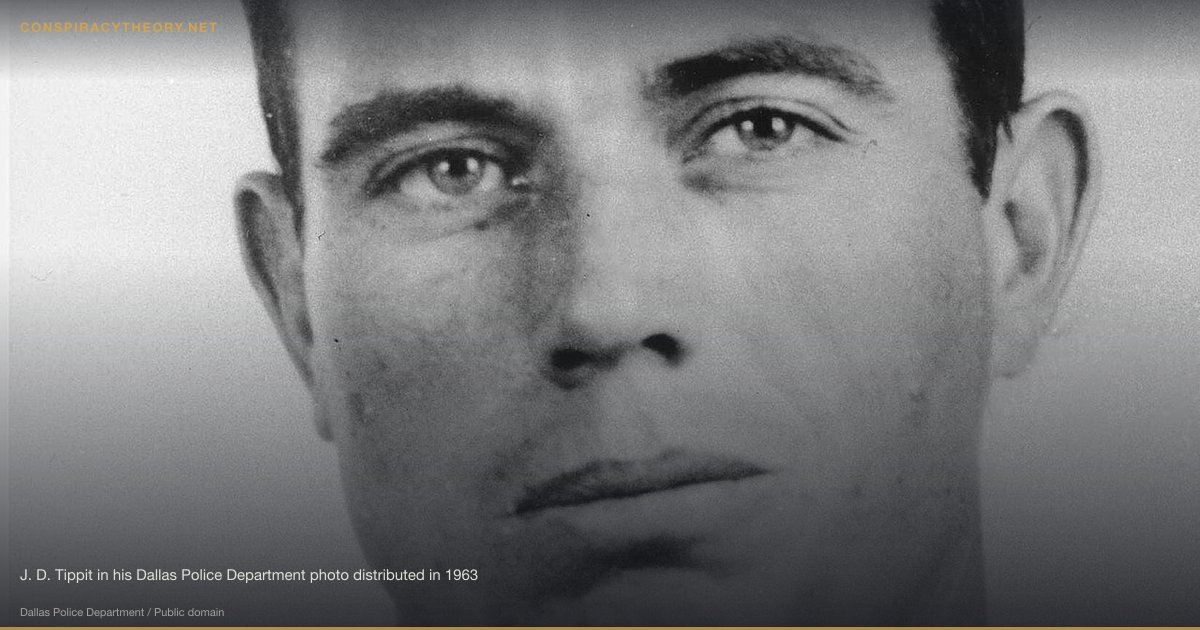
- His movements on November 22: Co-workers placed him on the sixth floor of the Texas School Book Depository that morning. He was the only employee to leave the building immediately after the shooting. He returned to his rooming house, retrieved a pistol, and shortly after shot and killed Dallas police officer J.D. Tippit
- The Warren Commission’s conclusion: Despite its flaws, the Commission’s core finding — that Oswald fired the shots from the sixth floor — was supported by substantial ballistic, photographic, and eyewitness evidence
- Absence of conspiracy evidence: No document, recording, or credible witness has ever directly demonstrated that a specific individual or organization recruited, directed, or paid Oswald to carry out the assassination
Debunking / Verification
The patsy theory occupies a unique space in conspiracy research: neither conclusively proven nor convincingly debunked. The Warren Commission’s finding that Oswald acted alone has been challenged by subsequent official investigations. The 1979 House Select Committee on Assassinations concluded that Kennedy was “probably assassinated as a result of a conspiracy” based on acoustic evidence (later disputed) and the broader weight of circumstantial evidence.
The Assassination Records Review Board, created by Congress in 1992, oversaw the release of millions of pages of previously classified documents. These documents revealed that both the CIA and FBI had withheld significant information about Oswald from the Warren Commission, but they did not produce a definitive “smoking gun” proving a conspiracy.
The question of whether Oswald was a patsy ultimately depends on which evidence one finds most compelling. The physical evidence placing him in the sniper’s nest is strong. But the pattern of intelligence connections, evidence destruction, and the convenient silencing by Jack Ruby leaves the question genuinely unresolved.
Cultural Impact
The “Oswald as patsy” narrative has become foundational to American conspiracy culture. It established the template that virtually all subsequent political conspiracy theories follow: the lone actor as cover story, the intelligence agency as puppet master, the convenient death of key witnesses, the destruction of evidence.
Oliver Stone’s 1991 film JFK brought the patsy theory to a mass audience, depicting Jim Garrison’s investigation and presenting Oswald as a pawn in a military-industrial conspiracy. The film was enormously influential — it directly led to the passage of the JFK Records Act of 1992, which created the Assassination Records Review Board. Stone’s portrayal of Oswald as an intelligence asset used and discarded has become the default popular understanding of the assassination for many Americans.
The theory has also shaped American political culture more broadly. The widespread belief that Oswald was set up has contributed to a deep, persistent skepticism of government narratives about political violence — a skepticism that resurfaced after the assassinations of Robert Kennedy and Martin Luther King Jr., during Watergate, and in the aftermath of 9/11.
In fiction and popular culture, the “patsy” archetype appears in countless thrillers, espionage novels, and films. Don DeLillo’s 1988 novel Libra offers a sophisticated fictional exploration of Oswald as a figure caught between intelligence factions. James Ellroy’s American Tabloid and its sequels depict the assassination as emerging from the intersection of CIA, Mafia, and anti-Castro Cuban exile operations.
Key Figures
- Lee Harvey Oswald — The accused assassin, former Marine and Soviet defector who claimed he was set up
- Jack Ruby — Dallas nightclub owner with mob connections who killed Oswald on live television, preventing any trial or testimony
- George de Mohrenschildt — Russian-born petroleum geologist with CIA connections who befriended Oswald in Dallas; found dead the day before his HSCA interview
- David Ferrie — CIA contract pilot connected to anti-Castro operations and Oswald’s Civil Air Patrol chapter; died under mysterious circumstances during the Garrison investigation
- Guy Banister — Former FBI agent running anti-Castro operations from the same address as Oswald’s pro-Castro activities in New Orleans
- James Hosty — FBI agent who had Oswald under surveillance and was ordered to destroy Oswald’s pre-assassination note
- James Jesus Angleton — CIA counterintelligence chief whose division handled Oswald’s file and withheld information from investigators
- Jim Garrison — New Orleans District Attorney who brought the only criminal case related to the assassination, alleging a conspiracy involving intelligence operatives
Timeline
| Date | Event |
|---|---|
| October 1939 | Lee Harvey Oswald born in New Orleans |
| 1956 | Oswald enlists in US Marines; stationed at Atsugi Air Base, Japan |
| September 1959 | Oswald receives early discharge and travels to Soviet Union |
| October 1959 | Attempts to renounce US citizenship at Moscow embassy |
| 1959-1962 | Lives in Minsk, USSR; marries Marina Prusakova |
| June 1962 | Returns to United States with wife and daughter; not prosecuted |
| August 1962 | Befriended by George de Mohrenschildt in Dallas |
| April 1963 | Attempts to assassinate General Edwin Walker |
| May-September 1963 | Moves to New Orleans; creates Fair Play for Cuba chapter at 544 Camp Street |
| Late September 1963 | Alleged visit to Mexico City embassies; Silvia Odio visit |
| October 1963 | Returns to Dallas; begins work at Texas School Book Depository |
| November 1963 | Visits FBI Dallas office, leaves note for Agent Hosty |
| November 22, 1963 | President Kennedy assassinated in Dallas; Oswald arrested |
| November 22, 1963 | Oswald tells reporters “I’m just a patsy” |
| November 24, 1963 | Jack Ruby shoots and kills Oswald on live television |
| September 1964 | Warren Commission concludes Oswald acted alone |
| 1966-1969 | Jim Garrison’s investigation in New Orleans |
| March 29, 1977 | George de Mohrenschildt found dead of gunshot wound |
| 1979 | HSCA concludes Kennedy “probably assassinated as a result of a conspiracy” |
| 1991 | Oliver Stone’s JFK brings patsy theory to mass audience |
| 1992 | JFK Records Act passed; Assassination Records Review Board created |
| 2017-2023 | Additional CIA and FBI documents declassified under Trump and Biden orders |
Sources & Further Reading
- Warren Commission. “Report of the President’s Commission on the Assassination of President Kennedy.” US Government Printing Office, 1964
- House Select Committee on Assassinations. “Final Report.” US Government Printing Office, 1979
- Summers, Anthony. Not in Your Lifetime: The Defining Book on the JFK Assassination. Open Road Media, 2013
- Talbot, David. Brothers: The Hidden History of the Kennedy Years. Free Press, 2007
- DeLillo, Don. Libra. Viking, 1988
- Garrison, Jim. On the Trail of the Assassins. Sheridan Square Press, 1988
- Newman, John. Oswald and the CIA: The Documented Truth About the Unknown Relationship Between the U.S. Government and the Alleged Killer of JFK. Skyhorse, 2008
- Morley, Jefferson. Our Man in Mexico: Winston Scott and the Hidden History of the CIA. University Press of Kansas, 2008
- Hosty, James P. Assignment: Oswald. Arcade Publishing, 1996
- Epstein, Edward Jay. Legend: The Secret World of Lee Harvey Oswald. McGraw-Hill, 1978
Related Theories
- JFK Assassination — The broader conspiracy surrounding the Kennedy assassination
- CIA Kennedy Plot — The theory that the CIA orchestrated the assassination
- The Single Bullet Theory — The Warren Commission’s controversial reconstruction of the shooting
- JFK Grassy Knoll — Evidence for a second shooter on the grassy knoll

Frequently Asked Questions
Did Oswald really say 'I'm just a patsy'?
What were Oswald's connections to intelligence agencies?
Why did Jack Ruby kill Lee Harvey Oswald?

Infographic
Share this visual summary. Right-click to save.
