Martin Luther King Jr. Assassination Conspiracy
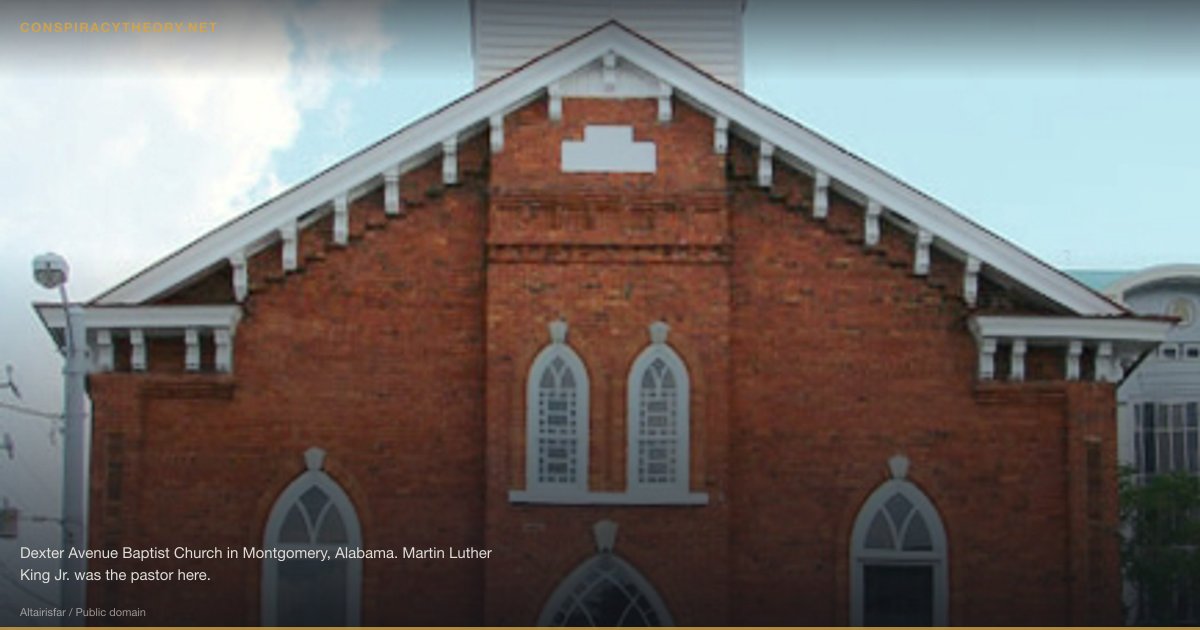
Overview
On April 4, 1968, Martin Luther King Jr. was assassinated by a single rifle shot while standing on the balcony of the Lorraine Motel in Memphis, Tennessee. He was thirty-nine years old. James Earl Ray, a small-time criminal and escaped convict, was arrested two months later at London’s Heathrow Airport and ultimately pleaded guilty to the murder, receiving a ninety-nine-year sentence. He recanted his plea three days later and spent the remaining twenty-nine years of his life insisting that he was an innocent patsy, manipulated by a shadowy figure he called “Raoul.”
The question of whether Ray acted alone — or whether King’s assassination was the product of a broader conspiracy involving law enforcement, government agencies, or organized crime — has never been definitively resolved. The FBI’s well-documented COINTELPRO campaign against King, which included surveillance, harassment, and an anonymous letter interpreted as a death threat, has provided powerful circumstantial evidence for conspiracy theorists. The 1979 House Select Committee on Assassinations concluded that a conspiracy was likely, though it could not identify the co-conspirators. Most strikingly, a 1999 civil trial brought by the King family resulted in a jury verdict finding that Loyd Jowers, a Memphis bar owner, and “others, including governmental agencies” were responsible for King’s death.
Despite these findings, no criminal charges related to a conspiracy have ever been brought, and the U.S. Department of Justice concluded in 2000 that the evidence presented at the civil trial was insufficient to prove a conspiracy beyond a reasonable doubt. The assassination of Martin Luther King Jr. remains one of the most contested events in American history, with the official lone-gunman narrative existing alongside credible allegations of a deeper conspiracy.
Origins & History
The suspicion that James Earl Ray did not act alone began almost immediately after King’s assassination. The circumstances of the crime raised questions that have never been fully answered. Ray was a petty criminal with no history of political violence and no apparent motive for assassinating a civil rights leader. He had escaped from the Missouri State Penitentiary in April 1967 and spent the following year traveling extensively through the United States, Mexico, and Canada — a level of mobility and funding that seemed inconsistent with his criminal profile.
After the assassination, Ray fled through Canada to London using multiple aliases and forged passports, a feat of international travel that his critics argued was beyond the capacity of a small-time burglar acting alone. The sophistication of his escape route — and the question of who funded it — has remained a persistent element of conspiracy theories.
The FBI’s role in the investigation was immediately suspect. Under J. Edgar Hoover, the bureau had waged a systematic campaign against King since 1963 through its COINTELPRO (Counter Intelligence Program) operations. The bureau wiretapped King’s phones, bugged his hotel rooms, attempted to undermine his relationships with allies and supporters, and in November 1964, sent him an anonymous letter that many historians interpret as encouraging his suicide. Hoover publicly called King “the most dangerous Negro in America” and devoted enormous bureau resources to discrediting him.
When the FBI was tasked with investigating King’s murder, critics noted the obvious conflict of interest. The very agency that had been working to destroy King was now charged with finding his killer. Nevertheless, the FBI conducted the investigation and concluded that Ray acted alone.
Ray pleaded guilty on March 10, 1969, avoiding a trial that his attorney, Percy Foreman, warned him he would lose. Just three days later, Ray recanted, claiming that he had been pressured into the plea and that the real story involved a man named “Raoul” who had recruited him for various activities, including purchasing the rifle used in the assassination. According to Ray, he was told the rifle was for an arms deal, not a murder, and he was set up as the fall guy.
The recantation set in motion decades of legal efforts to obtain a full trial. Ray was supported in this quest by a surprising ally: the King family themselves. Beginning in the mid-1990s, Coretta Scott King and her children publicly stated that they did not believe Ray acted alone and called for a new investigation. In 1997, Dexter King met with Ray in prison and publicly declared the family’s belief in his innocence.
Key Claims
-
James Earl Ray was a patsy. Ray and his supporters argued that he was manipulated by the mysterious “Raoul” into purchasing the rifle and being present in Memphis, then set up to take the blame for an assassination he did not commit or did not plan.
-
The FBI was directly involved in the assassination. Given the bureau’s COINTELPRO campaign against King, theorists argue that the FBI either orchestrated the assassination directly, facilitated it by withdrawing King’s security, or conspired with other parties to have King killed.
-
Memphis police were complicit. The standard security detail for King’s visit to Memphis was mysteriously reduced on April 4. Two African American detectives who had been assigned to shadow King were pulled from the detail, and a black fireman at the fire station near the Lorraine Motel was also reassigned. These changes removed potential witnesses and reduced security.
-
Loyd Jowers was part of the conspiracy. Jowers, who owned Jim’s Grill on the ground floor of the rooming house from which the fatal shot was allegedly fired, claimed in 1993 that he had been paid $100,000 by a Memphis produce dealer named Frank Liberto to arrange King’s assassination. Jowers claimed the actual shooter was not Ray but a Memphis police officer.
-
The shot was fired from a different location. Some ballistics experts and conspiracy researchers have argued that the fatal shot could not have come from the bathroom window of the rooming house where Ray was allegedly positioned, but instead came from the bushes behind the building or from another location.
-
Military intelligence was involved. Attorney William Pepper, who represented Ray and later the King family, alleged that an Army Special Forces sniper team was deployed to Memphis as a backup assassination squad, and that military intelligence had King under surveillance on the day of his death.
Evidence
Supporting the Conspiracy Theory
The documented COINTELPRO campaign against King is not a theory but a confirmed historical fact. FBI files released through FOIA requests and congressional investigations reveal the extraordinary lengths to which the bureau went to neutralize King. The Church Committee hearings in 1975 exposed these operations in detail, establishing that the FBI viewed King as a national security threat and worked systematically to destroy him.
The security changes on April 4, 1968, are documented. Detective Ed Redditt, who had been assigned to a surveillance post at the fire station across from the Lorraine Motel, was pulled from his position hours before the assassination, ostensibly due to a death threat against him. Officer Willie B. Richmond, who had been assigned to shadow King, was also reassigned. These removals have never been fully explained.
The 1979 House Select Committee on Assassinations, after a two-year investigation, concluded that there was a “likelihood that James Earl Ray assassinated Dr. Martin Luther King Jr. as a result of a conspiracy.” The committee found that Ray’s brothers or associates from the Grapevine Tavern in St. Louis may have been involved but could not identify all conspirators.
Loyd Jowers’ 1993 confession on ABC’s Prime Time Live provided a specific alternative account of the assassination. While the credibility of Jowers’ claims has been questioned, his account was tested at the 1999 civil trial, where the jury found in favor of the King family.
The 1999 King v. Jowers verdict is the most striking piece of evidence. The jury heard testimony from over seventy witnesses over four weeks and concluded that Jowers and governmental agencies were responsible for King’s death. While civil trials have a lower burden of proof than criminal trials, the unanimous verdict carries significant weight.
Ray’s ability to fund extensive international travel after escaping from prison has never been adequately explained by the lone-gunman theory. In the year between his prison escape and the assassination, Ray traveled to Los Angeles, New Orleans, Mexico, Atlanta, Memphis, Toronto, London, and Lisbon, obtaining multiple fake identity documents along the way.
Against the Conspiracy Theory
James Earl Ray had a documented history of racist attitudes. While he had no specific grudge against King, his brother Jerry Ray later acknowledged that James harbored strong racial prejudices, and some researchers have argued that the potential bounty offered by segregationists for King’s death provided sufficient motivation.
The “Raoul” figure has never been identified despite decades of investigation. Ray’s descriptions of Raoul were inconsistent over the years, and the House Select Committee on Assassinations was unable to confirm the existence of anyone matching Ray’s descriptions.
The ballistics evidence is consistent with a shot from the bathroom window of the rooming house. While some researchers dispute this, the physical evidence — including the trajectory of the bullet and the position of King’s body — is compatible with the official account.
The 1999 civil trial has been criticized on multiple grounds. The defense (representing Jowers) presented minimal opposition, and some of the testimony was inconsistent with known facts. The U.S. Department of Justice investigated the trial’s evidence in 2000 and concluded that it was not sufficient to establish a conspiracy. The DOJ report noted that Jowers had changed his story multiple times and that key witnesses had credibility problems.
Loyd Jowers’ claims have been questioned by investigators who noted that he stood to benefit financially from the story (he reportedly received $300,000 for his television appearance) and that his account changed significantly over time.
Debunking / Verification
The MLK assassination conspiracy remains classified as “unresolved” because no investigation has conclusively resolved the fundamental questions. The FBI’s documented campaign against King is an established fact, not a theory. The question of whether this campaign extended to orchestrating his murder has never been definitively answered in either direction.
The 1999 civil jury’s finding of conspiracy has not been followed by criminal charges. The DOJ’s 2000 investigation challenged the reliability of the trial evidence but did not conduct a comprehensive reinvestigation of the assassination itself.
Ray’s guilty plea was entered without a full trial, meaning that the evidence against him was never subjected to adversarial scrutiny. No murder weapon fingerprint evidence conclusively linked Ray to the shooting; the rifle found at the scene bore his fingerprints, but this was consistent with his admitted purchase of the weapon.
The HSCA’s finding of a “likelihood” of conspiracy remains the highest-level official assessment, but the committee was unable to identify the conspirators or establish the mechanism of the conspiracy.
Multiple investigations — by the FBI (1968), the HSCA (1977-1979), the King family’s civil case (1999), and the DOJ (2000) — have reached different conclusions, leaving the historical record fundamentally unsettled.
Cultural Impact
The unresolved questions surrounding King’s assassination have had profound effects on American political culture. The case has contributed to deep-seated distrust of law enforcement and government institutions, particularly within the African American community. The documented reality of COINTELPRO — revealed through congressional investigations in the 1970s — transformed what had been dismissed as paranoid conspiracy theories about FBI surveillance of civil rights leaders into confirmed historical fact.
The assassination conspiracy has become intertwined with the broader narrative of the civil rights era, serving as a reminder that the movement’s leaders faced not just social opposition but organized state persecution. The case is frequently cited alongside the assassinations of John F. Kennedy, Robert F. Kennedy, and Malcolm X as evidence of a systematic campaign to eliminate transformative American leaders during the 1960s.
The King family’s public support for conspiracy theories — including their meeting with Ray and their pursuit of the civil trial — has lent the alternative narrative a legitimacy that most assassination conspiracy theories lack. When the family of the victim endorses the conspiracy theory, the usual dismissive response becomes untenable.
The case has also influenced public policy debates about government surveillance and the accountability of law enforcement agencies. The revelation of COINTELPRO contributed to reforms including the Foreign Intelligence Surveillance Act (FISA) and restrictions on domestic intelligence gathering, though critics argue these reforms have been eroded over time.
In Popular Culture
King’s assassination and the surrounding conspiracy theories have been depicted in numerous films, television programs, and literary works. The 2016 HBO documentary King in the Wilderness explored King’s final years, including the tensions with the FBI. The 2014 film Selma depicted the FBI’s surveillance of King, including a dramatization of the anonymous letter. Spike Lee’s Chi-Raq (2015) references the assassination conspiracy in its broader examination of American violence.
The television series Unsolved Mysteries devoted segments to the case, and the History Channel has produced multiple documentaries examining the conspiracy evidence. The PBS series American Experience covered the assassination in its episode “Roads to Memphis.”
In literature, William Pepper’s books Orders to Kill (1995) and An Act of State (2003) present the most detailed case for a conspiracy. Hampton Sides’ Hellhound on His Trail (2010) provides a narrative account that focuses on Ray as the lone assassin. Taylor Branch’s At Canaan’s Edge (2006) covers the assassination within the broader context of the civil rights movement.
The conspiracy has also been referenced in music, from U2’s “Pride (In the Name of Love)” to Public Enemy’s politically charged hip-hop, which frequently invokes the government’s persecution of civil rights leaders.
Key Figures
-
Martin Luther King Jr. (1929-1968): Civil rights leader, Nobel Peace Prize laureate, and the victim. His campaigns for racial equality, voting rights, and economic justice made him the most prominent target of FBI COINTELPRO operations.
-
James Earl Ray (1928-1998): Convicted assassin who pleaded guilty but immediately recanted. He spent 29 years in prison maintaining that he was a patsy manipulated by a man named “Raoul.” He died of hepatitis C in prison without ever receiving the full trial he requested.
-
J. Edgar Hoover (1895-1972): FBI Director whose personal animosity toward King drove the COINTELPRO campaign. Hoover called King “the most dangerous Negro of the future” and directed extensive surveillance and harassment operations.
-
Loyd Jowers (1926-2000): Memphis bar owner who claimed in 1993 that he was part of a conspiracy to assassinate King and that the actual shooter was a Memphis police officer, not Ray. His claims were tested at the 1999 civil trial.
-
William Pepper (1937-2023): Attorney and author who represented Ray in his later appeals and represented the King family in the 1999 civil trial. He spent decades investigating the case and published multiple books alleging a comprehensive conspiracy.
-
Coretta Scott King (1927-2006): King’s widow, who publicly stated her belief that a conspiracy was responsible for her husband’s death and supported the 1999 civil trial.
-
Dexter King (1961-2024): King’s son, who visited Ray in prison in 1997 and publicly told him, “I believe you, and my family believes you.”
Timeline
- 1963: FBI begins COINTELPRO surveillance of King after the March on Washington.
- November 1964: FBI sends anonymous letter to King, interpreted as encouraging suicide.
- April 23, 1967: James Earl Ray escapes from Missouri State Penitentiary.
- March 1968: King travels to Memphis to support sanitation workers’ strike.
- April 3, 1968: King delivers “I’ve Been to the Mountaintop” speech at Mason Temple.
- April 4, 1968: King assassinated at the Lorraine Motel at 6:01 PM. Security detail had been reduced earlier that day.
- April 4, 1968: Police find a bundle containing a Remington rifle and other items near the crime scene.
- June 8, 1968: Ray arrested at Heathrow Airport in London on a Canadian passport.
- March 10, 1969: Ray pleads guilty; sentenced to 99 years.
- March 13, 1969: Ray recants guilty plea; begins decades-long effort for a trial.
- 1975: Church Committee hearings expose COINTELPRO operations against King.
- 1977-1979: House Select Committee on Assassinations investigates; concludes a conspiracy was “likely.”
- 1993: Loyd Jowers publicly claims on ABC’s Prime Time Live that he was involved in a conspiracy to kill King.
- 1997: Dexter King meets Ray in prison, publicly declares family believes he is innocent.
- April 23, 1998: James Earl Ray dies in prison.
- November-December 1999: King v. Jowers civil trial. Jury finds Jowers and governmental agencies liable for King’s death.
- June 2000: U.S. Department of Justice publishes report challenging the evidence from the civil trial.
Sources & Further Reading
- Pepper, William F. An Act of State: The Execution of Martin Luther King. Verso, 2003.
- Pepper, William F. Orders to Kill: The Truth Behind the Murder of Martin Luther King Jr. Carroll & Graf, 1995.
- Sides, Hampton. Hellhound on His Trail: The Stalking of Martin Luther King Jr. and the International Hunt for His Assassin. Doubleday, 2010.
- Branch, Taylor. At Canaan’s Edge: America in the King Years, 1965-68. Simon & Schuster, 2006.
- Garrow, David J. The FBI and Martin Luther King, Jr.: From “Solo” to Memphis. W.W. Norton, 1981.
- House Select Committee on Assassinations. Final Report. U.S. Government Printing Office, 1979.
- U.S. Department of Justice. Investigation of Recent Allegations Regarding the Assassination of Dr. Martin Luther King, Jr. June 2000.
- Posner, Gerald. Killing the Dream: James Earl Ray and the Assassination of Martin Luther King Jr. Random House, 1998.
Related Theories
- JFK Assassination — Another 1960s assassination with persistent conspiracy theories about government involvement.
- RFK Assassination — The assassination of Robert F. Kennedy, part of the broader pattern of 1960s political killings.
- COINTELPRO — The confirmed FBI domestic surveillance and disruption program that targeted King and other civil rights leaders.
- Malcolm X Assassination — Another civil rights leader assassination with documented government involvement.
- Fred Hampton Assassination — The confirmed FBI-coordinated killing of the Black Panther leader.

Frequently Asked Questions
Did a jury really find that the U.S. government was involved in MLK's assassination?
Did James Earl Ray confess to killing Martin Luther King Jr.?
What was the FBI's relationship with Martin Luther King Jr.?
What did the House Select Committee on Assassinations conclude about King's killing?

Infographic
Share this visual summary. Right-click to save.
