Malcolm X Assassination Conspiracy
Overview
On February 21, 1965, Malcolm X was shot and killed while addressing an audience of approximately four hundred people at the Audubon Ballroom in the Washington Heights neighborhood of Manhattan. He was thirty-nine years old. Three men were convicted of his murder: Mujahid Abdul Halim (born Talmadge Hayer), Muhammad Abdul Aziz (born Norman 3X Butler), and Khalil Islam (born Thomas 15X Johnson). Halim confessed to participating in the shooting and identified his actual co-conspirators, but his testimony was ignored, and Aziz and Islam — who maintained their innocence for over fifty years — were convicted alongside him.
In November 2021, a joint investigation by the Manhattan District Attorney’s office and the Innocence Project led to the exoneration of Aziz and Islam. The investigation revealed that the FBI and the New York Police Department’s Bureau of Special Services and Investigations (BOSSI) had withheld critical evidence from the defense and prosecution alike, including the existence of undercover informants at the scene of the assassination and intelligence suggesting that the actual killers came from the Nation of Islam’s Newark mosque.
What had been dismissed for decades as a conspiracy theory — that government agencies played a role in Malcolm X’s death, or at minimum allowed it to happen — was partially vindicated by the 2021 exonerations. The case has become a landmark example of how official narratives can collapse under the weight of suppressed evidence, and it has raised profound questions about the extent to which the FBI and NYPD facilitated the assassination of one of the twentieth century’s most important political figures.
Origins & History
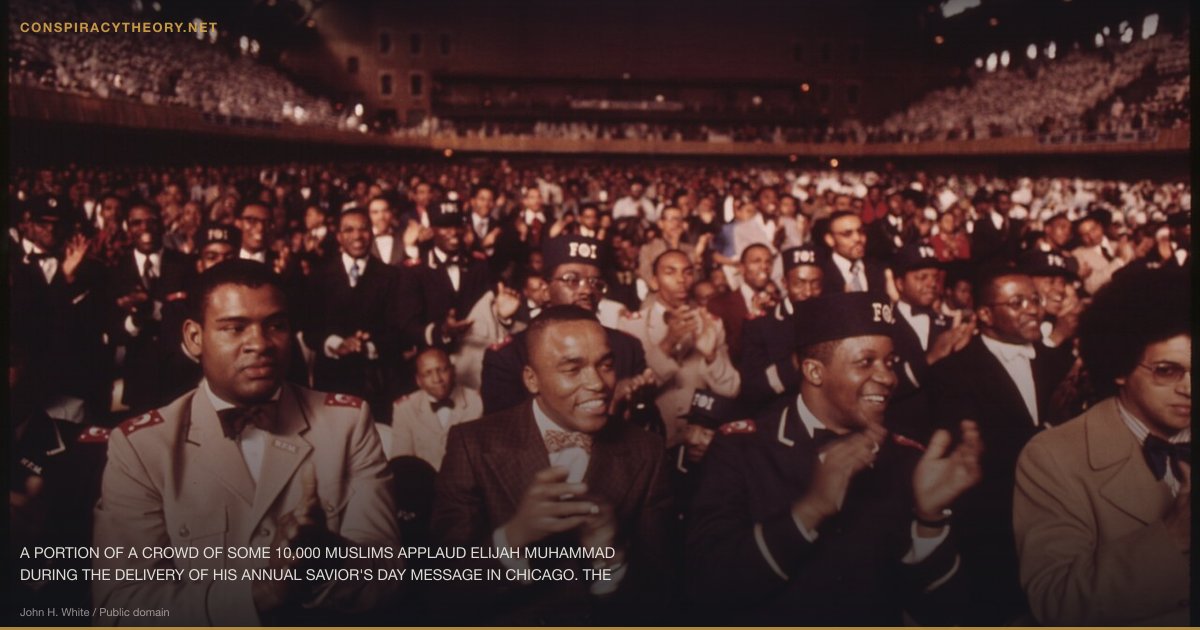
Malcolm X’s assassination took place against the backdrop of his bitter break with the Nation of Islam and its leader, Elijah Muhammad. Malcolm had been the Nation’s most prominent spokesman and recruiter throughout the late 1950s and early 1960s, building the organization’s membership from approximately five hundred to an estimated thirty thousand. His charisma and militant rhetoric made him one of the most recognizable figures in American public life.
The break began in late 1963, when Malcolm was suspended by Elijah Muhammad after making controversial remarks about the assassination of President Kennedy. During his suspension, Malcolm learned of allegations that Muhammad had fathered children with several young secretaries, violating the Nation’s strict moral code. Malcolm’s public acknowledgment of these accusations deepened the rift irreparably.
In March 1964, Malcolm formally left the Nation of Islam and founded the Organization of Afro-American Unity (OAAU), a secular pan-Africanist group. He undertook pilgrimages to Mecca and extensive travel throughout Africa and the Middle East, experiences that broadened his worldview and led him to adopt orthodox Sunni Islam, taking the name El-Hajj Malik El-Shabazz. His evolving political philosophy, which increasingly emphasized human rights and international solidarity, made him a more formidable figure than ever.
The feud between Malcolm and the Nation became increasingly violent. His home in East Elmhurst, Queens, was firebombed on February 14, 1965, one week before his assassination. The Nation’s newspaper, Muhammad Speaks, published articles and cartoons depicting Malcolm as a traitor deserving death. Louis X (later Louis Farrakhan), the minister of the Nation’s Boston mosque who had replaced Malcolm as the organization’s public face, wrote in December 1964 that Malcolm was “worthy of death.”
Throughout this period, both Malcolm and the Nation of Islam were under intensive FBI surveillance through the COINTELPRO program. The FBI’s stated objective was to “prevent the rise of a messiah who could unify and electrify the militant black nationalist movement.” Declassified documents show that the FBI actively worked to exacerbate the conflict between Malcolm and the Nation, sending inflammatory letters and using informants to deepen suspicions on both sides.
The NYPD’s BOSSI unit also maintained extensive surveillance of Malcolm. At the time of his assassination, an undercover BOSSI detective named Gene Roberts — who later became known as one of the “Panther 21” defendants — was serving as one of Malcolm’s bodyguards and was present in the Audubon Ballroom when the shooting occurred.
Key Claims
-
The FBI had advance knowledge of the assassination plot and allowed it to proceed. The FBI’s extensive infiltration of both Malcolm’s organization and the Nation of Islam, combined with the presence of informants at the scene, suggests the bureau either knew of the plot or was in a position to know and chose not to intervene.
-
The NYPD deliberately withdrew security from the Audubon Ballroom. On the day of the assassination, the NYPD’s standard security presence at Malcolm’s events was reportedly reduced. No uniformed officers were inside the ballroom, and the police response to the shooting was notably slow.
-
Two innocent men were deliberately framed. The wrongful convictions of Aziz and Islam were not honest mistakes but the product of a deliberate effort to protect the actual killers and conceal the government’s role in the events surrounding the assassination.
-
The FBI’s COINTELPRO operations actively facilitated the assassination. By inflaming the conflict between Malcolm and the Nation of Islam, the FBI created the conditions for violence and may have deliberately steered events toward assassination.
-
The actual assassins were protected. Halim identified his real co-conspirators as members of the Nation of Islam’s Newark mosque — specifically Leon Davis, William Bradley (later known as Abdur-Rahman), Ben Thomas, and Wilbur McKinley. None of these men were ever charged, and some lived openly in Newark for decades.
-
Louis Farrakhan bears moral responsibility. Farrakhan’s inflammatory rhetoric in the months before the assassination has been cited as helping to create a climate that made the killing possible. In 2000, Farrakhan acknowledged that his words may have contributed to the atmosphere that led to Malcolm’s death.
Evidence
Supporting the Conspiracy Theory
The 2021 exonerations provided the most significant evidence of government misconduct. The investigation revealed that the FBI had an informant — identified by the pseudonym “Brother John” — inside Malcolm’s OAAU who reported on the organization’s activities. The FBI also had informants within the Nation of Islam. Despite this extensive intelligence network, the bureau claimed it had no advance warning of the assassination.
NYPD undercover detective Gene Roberts was physically present in the Audubon Ballroom at the time of the shooting. Roberts, who was posing as a member of Malcolm’s security detail, later said he attempted to give Malcolm CPR after the shooting. The presence of a police operative inside the event, combined with the absence of uniformed officers, raises questions about what the NYPD knew and when.
The Manhattan District Attorney’s reinvestigation found that prosecutors had withheld multiple pieces of exculpatory evidence from the defense, including FBI reports and NYPD surveillance files. This suppression of evidence is a confirmed fact, not speculation.
Halim’s sworn testimony identifying his actual co-conspirators — which he first provided in 1977 in an affidavit and repeated multiple times thereafter — was consistent and specific. He named four men from the Newark mosque and provided details about the planning and execution of the assassination. The failure to investigate these leads for decades represents either extraordinary incompetence or deliberate disregard.
Declassified FBI documents show that the bureau’s COINTELPRO operations specifically aimed to prevent the emergence of a “Black Messiah” and to exploit conflicts between Black nationalist organizations. A February 1968 FBI memo explicitly listed this as an objective, and the bureau’s actions toward Malcolm and the Nation of Islam were consistent with this goal.
Against the Conspiracy Theory
While the FBI and NYPD clearly acted improperly in suppressing evidence and allowing wrongful convictions to stand, there is no direct evidence that either agency ordered or facilitated the assassination itself. The distinction between “allowed it to happen” and “made it happen” is significant, and the available evidence does not conclusively establish the latter.
The conflict between Malcolm and the Nation of Islam was genuine and required no government instigation to become violent. The Nation had a documented history of violence against members who left the organization, and Malcolm himself acknowledged repeatedly in his final months that he expected to be killed by Nation members.
Halim, the confessed assassin, was a committed Nation of Islam member who acted out of loyalty to Elijah Muhammad. His co-conspirators, as he identified them, were also Nation members. The assassination can be explained as an internal religious and political conflict without requiring government orchestration.
The security failures at the Audubon Ballroom may have been the product of incompetence, resource constraints, and the chaos of the era rather than deliberate conspiracy. The NYPD was managing multiple security challenges in 1965, and the withdrawal of officers from Malcolm’s events may have reflected a policy decision rather than a plot.
Debunking / Verification
This case receives a “mixed” classification because significant elements of what was once dismissed as conspiracy theory have been confirmed as fact, while other claims remain unproven.
Confirmed: Two of the three convicted men were innocent. The FBI and NYPD suppressed evidence. Government informants were present at the scene. The FBI’s COINTELPRO program actively worked to exacerbate conflicts between Malcolm and the Nation of Islam.
Unconfirmed: Whether the FBI or NYPD had specific advance knowledge of the assassination plot. Whether government agents actively facilitated the killing beyond creating the conditions for it. Whether there was a deliberate decision at any level of government to allow the assassination to proceed.
Established context: The FBI’s COINTELPRO operations against Black leaders, including the confirmed role of the FBI in the assassination of Fred Hampton in 1969, demonstrate that the bureau was willing to participate in lethal operations against Black political figures during this period.
Cultural Impact
The Malcolm X assassination conspiracy has had a lasting impact on American political culture, particularly within the African American community. The case has served as a touchstone for discussions about state violence against Black leaders and the reliability of the criminal justice system.
The 2021 exonerations resonated far beyond the specific facts of the case. Coming during a period of heightened national attention to racial justice following the murder of George Floyd, the exonerations reinforced narratives about systemic racism in law enforcement and the criminal justice system. The revelation that two Black men had spent decades in prison for a crime they did not commit, while government agencies suppressed the evidence that could have freed them, became a powerful symbol of institutional failure.
The case has also influenced public attitudes toward conspiracy theories more broadly. The fact that claims about government involvement in Malcolm’s assassination — long dismissed by mainstream commentators as paranoid — were substantially vindicated by the 2021 investigation has been cited by conspiracy theorists across the political spectrum as evidence that official narratives should not be trusted.
Malcolm X’s legacy has continued to grow in the decades since his death. His autobiography, published shortly after his assassination, remains one of the most widely read books in American literature. His political philosophy has influenced generations of activists, scholars, and artists, and the unresolved questions about his death have become part of his enduring mythology.
In Popular Culture
Spike Lee’s 1992 film Malcolm X, starring Denzel Washington, is the definitive cinematic treatment of Malcolm’s life and assassination. The film depicts the assassination in detail and hints at government involvement. Lee’s work was instrumental in introducing Malcolm’s story to a new generation.
The 2020 Netflix documentary series Who Killed Malcolm X? by investigative journalist Abdur-Rahman Muhammad played a direct role in prompting the reinvestigation that led to the 2021 exonerations. The series traced Muhammad’s decades-long investigation into the actual killers and the evidence of government misconduct.
Manning Marable’s Pulitzer Prize-winning biography Malcolm X: A Life of Reinvention (2011) provided a comprehensive scholarly account of Malcolm’s life, including new details about the circumstances of his assassination. Les Payne and Tamara Payne’s The Dead Are Arising: The Life of Malcolm X (2020), which won the National Book Award, offered additional insights based on decades of research.
The assassination conspiracy has been referenced in music by artists including Public Enemy, Nas, and Kendrick Lamar, who have invoked Malcolm’s death as evidence of state violence against Black leaders. The phrase “by any means necessary,” from one of Malcolm’s most famous speeches, has become a cultural touchstone that transcends its original context.
Key Figures
-
Malcolm X / El-Hajj Malik El-Shabazz (1925-1965): Civil rights leader, minister, and pan-Africanist whose break with the Nation of Islam and subsequent assassination are at the center of the conspiracy.
-
Mujahid Abdul Halim / Talmadge Hayer (born 1941): The only one of the three convicted men who actually participated in the assassination. He confessed to the shooting and identified his real co-conspirators, but his testimony implicating other Nation members was ignored. He was paroled in 2010.
-
Muhammad Abdul Aziz / Norman 3X Butler (born 1938): Wrongfully convicted of Malcolm’s murder. He maintained his innocence for 55 years and was exonerated in November 2021.
-
Khalil Islam / Thomas 15X Johnson (1935-2009): Wrongfully convicted of the assassination. He maintained his innocence until his death in 2009. He was posthumously exonerated in 2021.
-
Elijah Muhammad (1897-1975): Leader of the Nation of Islam whose conflict with Malcolm over leadership, doctrine, and personal conduct created the conditions for the assassination.
-
Louis Farrakhan (born 1933): Nation of Islam minister who publicly called Malcolm a traitor worthy of death in the months before the assassination. He later acknowledged that his rhetoric may have contributed to the killing.
-
Gene Roberts: Undercover NYPD BOSSI detective who infiltrated Malcolm’s organization and was present at the Audubon Ballroom during the assassination.
-
J. Edgar Hoover (1895-1972): FBI Director who oversaw COINTELPRO operations targeting both Malcolm X and the Nation of Islam.
Timeline
- 1952: Malcolm Little joins the Nation of Islam while in prison; takes the name Malcolm X.
- 1953-1963: Malcolm rises to become the Nation’s most prominent spokesman.
- November 1963: Malcolm suspended by Elijah Muhammad after controversial remarks about JFK’s assassination.
- March 8, 1964: Malcolm formally breaks with the Nation of Islam.
- March 1964: Malcolm founds the Organization of Afro-American Unity (OAAU).
- April-May 1964: Malcolm makes pilgrimage to Mecca; adopts name El-Hajj Malik El-Shabazz.
- December 1964: Louis X (Farrakhan) writes that Malcolm is “worthy of death” in Muhammad Speaks.
- February 14, 1965: Malcolm’s home in Queens is firebombed; he blames the Nation of Islam.
- February 21, 1965: Malcolm X is shot and killed at the Audubon Ballroom in Manhattan. Three men are arrested.
- March 1966: Halim, Aziz, and Islam convicted of first-degree murder; all sentenced to life in prison.
- 1977: Halim signs affidavit naming his actual co-conspirators from the Newark mosque; courts ignore the filing.
- 1975: Church Committee hearings reveal COINTELPRO operations targeting Black leaders.
- 1985: Khalil Islam paroled.
- 1985: Muhammad Abdul Aziz paroled.
- 2009: Khalil Islam dies, still maintaining his innocence.
- 2010: Halim paroled.
- 2020: Netflix documentary Who Killed Malcolm X? airs, prompting reinvestigation.
- November 18, 2021: Manhattan DA vacates convictions of Aziz and Islam; both exonerated.
- 2022-2023: City of New York reaches financial settlements with Aziz and Islam’s estate.
Sources & Further Reading
- Marable, Manning. Malcolm X: A Life of Reinvention. Viking, 2011.
- Payne, Les, and Tamara Payne. The Dead Are Arising: The Life of Malcolm X. Liveright, 2020.
- X, Malcolm, and Alex Haley. The Autobiography of Malcolm X. Grove Press, 1965.
- Muhammad, Abdur-Rahman. Who Killed Malcolm X? Netflix documentary series, 2020.
- Rickford, Russell. Betty Shabazz: A Remarkable Story of Survival and Faith Before and After Malcolm X. Sourcebooks, 2003.
- Evanzz, Karl. The Judas Factor: The Plot to Kill Malcolm X. Thunder’s Mouth Press, 1992.
- FBI Records: COINTELPRO — Black Nationalist Hate Groups. Declassified files.
- Manhattan District Attorney’s Office. Investigation and Motion to Vacate Convictions, November 2021.
Related Theories
- MLK Assassination Conspiracy — Another civil rights leader assassination with documented FBI COINTELPRO involvement.
- COINTELPRO — The confirmed FBI program that targeted both Malcolm X and the Nation of Islam.
- RFK Assassination — Part of the broader pattern of 1960s political assassinations.
- JFK Assassination — The defining political assassination conspiracy of the era.
- Fred Hampton Assassination — The confirmed FBI-coordinated killing of the Black Panther leader in 1969.

Frequently Asked Questions
Were the men convicted of killing Malcolm X actually guilty?
Did the FBI know about the plot to kill Malcolm X in advance?
What role did the Nation of Islam play in Malcolm X's assassination?
Has anyone been held accountable for the wrongful convictions?

Infographic
Share this visual summary. Right-click to save.
