Jimmy Hoffa's Disappearance
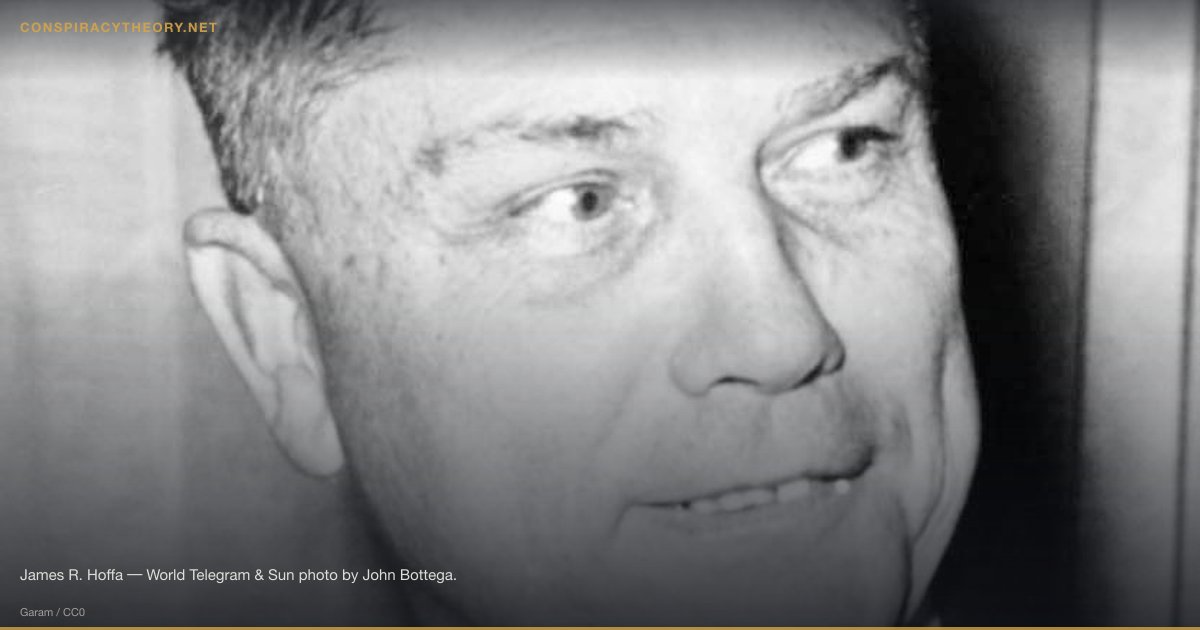
Overview
At approximately 2:30 p.m. on July 30, 1975, Jimmy Hoffa — former president of the International Brotherhood of Teamsters, the most powerful labor leader in American history, and a man who had once personally called strikes that shut down the nation’s transportation system — walked out of the Machus Red Fox restaurant in suburban Detroit, got into a car, and vanished from the face of the earth.
He has been missing for half a century. His body has never been found. And his disappearance has become so culturally embedded that “where’s Jimmy Hoffa buried?” is essentially an American idiom — shorthand for any unsolvable mystery, any question that generates speculation but never answers.
The broad outlines of what happened are not particularly mysterious. Hoffa was almost certainly murdered by organized crime figures who feared his return to the Teamsters presidency would threaten their control of the union’s multibillion-dollar pension fund. The specific details — who pulled the trigger, where the body went, exactly which Mob bosses ordered the hit — remain the subject of competing theories, deathbed confessions, FBI investigations, and one very expensive Martin Scorsese movie.
The Man
The Rise
James Riddle Hoffa (the middle name was unfortunate but accurate) was born in 1913 in Brazil, Indiana, and grew up in Detroit during the Depression. He started organizing labor at age 17, working the loading docks of a Kroger grocery warehouse. By his twenties, he was running Teamsters Local 299 in Detroit. By his forties, he was president of the entire International Brotherhood of Teamsters — representing 2.3 million workers, controlling the largest private pension fund in the world, and wielding enough economic power to make presidents nervous.
Hoffa was brilliant, ruthless, and spectacularly corrupt. He was also genuinely beloved by rank-and-file Teamsters, who saw their wages and benefits increase dramatically under his leadership. He built the pension fund from nothing into a $1.5 billion giant. He also allowed the Mafia to tap that fund for loans — hundreds of millions of dollars that flowed to Las Vegas casino construction, real estate development, and various Mob enterprises.
The relationship between Hoffa and the Mob was symbiotic. The Mob provided muscle for organizing campaigns and protected Hoffa from rival labor leaders. Hoffa provided access to the pension fund and a veneer of legitimacy for organized crime’s business interests. Both parties profited enormously.
The Fall
Attorney General Robert F. Kennedy made Hoffa his personal crusade in the early 1960s. The “Get Hoffa” squad — as Kennedy’s team was known — pursued Hoffa relentlessly, securing his conviction in 1964 on charges of jury tampering and pension fund fraud. After exhausting his appeals, Hoffa entered federal prison in 1967.
In 1971, President Richard Nixon commuted Hoffa’s sentence — but with a critical condition: Hoffa was barred from union activity until 1980. The condition was widely believed to have been inserted at the request of the Mob and of Frank Fitzsimmons, Hoffa’s handpicked successor who had discovered that being Teamsters president was considerably more enjoyable than being Hoffa’s subordinate.
Hoffa served 58 months in prison. He emerged in December 1971, humbled but not broken, and immediately began plotting his return to the Teamsters presidency.
The Disappearance
July 30, 1975
Here’s what is known:
2:00 p.m.: Hoffa arrived at the Machus Red Fox restaurant in Bloomfield Hills, an upscale suburb northwest of Detroit. He was there for a meeting with Anthony Provenzano (“Tony Pro”), a Teamsters vice president and captain in the Genovese crime family, and Anthony Giacalone (“Tony Jack”), a senior figure in the Detroit Mafia.
2:15 p.m.: Hoffa called his wife Josephine from a pay phone outside the restaurant, telling her that his meeting had not arrived. “Where the hell is Giacalone?” he said. “He was supposed to be here at two.”
2:30 p.m.: Witnesses reported seeing Hoffa get into a car in the restaurant parking lot. Descriptions of the car and its occupants varied.
After 2:30 p.m.: Nothing. Hoffa was never seen or heard from again.
His car — a 1974 Pontiac Grand Ville — was found in the parking lot that evening. His body was never found. No witness has ever provided a definitive account of what happened after he got into that car.
The Suspects
Anthony Provenzano: A Teamsters VP and Genovese crime family captain. Hoffa and Provenzano had once been allies — they were even prison cellmates at Lewisburg Federal Penitentiary. But the relationship had soured badly. Provenzano was furious about pension disputes, and Hoffa had allegedly threatened to expose Provenzano’s criminal activities. Provenzano had an alibi: he was playing cards at a Teamsters hall in New Jersey when Hoffa disappeared. The alibi was provided by fellow Teamsters officials.
Anthony Giacalone: A Detroit Mob figure who was supposed to be at the meeting but wasn’t. Giacalone claimed he was at the Southfield Athletic Club getting a massage at the time of Hoffa’s disappearance. He denied ever having a meeting scheduled with Hoffa.
Charles “Chuckie” O’Brien: Hoffa’s “foster son” and longtime Teamsters associate. O’Brien was reportedly seen driving Giacalone’s car that afternoon. Cadaver dogs later hit on the trunk of the car. O’Brien denied any involvement throughout his life (he died in 2020). He was generally considered the person who lured Hoffa into the car.
Frank “The Irishman” Sheeran: A labor organizer and alleged hitman with close ties to both Hoffa and the Bufalino crime family. On his deathbed in 2003, Sheeran told author Charles Brandt that he had shot Hoffa in a house on Breckenridge Street in Detroit. He claimed the murder was ordered by Russell Bufalino, the boss of the northeastern Pennsylvania Mafia family.
Who Ordered the Hit?
The consensus among investigators is that the order came from the highest levels of organized crime — likely a consortium of Mob bosses who collectively decided that Hoffa’s return to the Teamsters presidency was unacceptable. The leading candidates:
- Russell Bufalino: The quietly powerful boss of the northeastern Pennsylvania crime family. Bufalino had been Hoffa’s most important Mob ally, and his decision to turn on Hoffa would have been decisive.
- Anthony Accardo: The boss of the Chicago Outfit, which had massive interests in Las Vegas casino operations funded by the Teamsters pension fund.
- Carlos Marcello: The New Orleans boss who had his own Teamsters connections.
The motive was straightforward: Fitzsimmons, Hoffa’s successor, was a more pliable Teamsters president. Hoffa’s return threatened the comfortable arrangement between the Mob and the union. A dead Hoffa solved the problem permanently.
The Search for the Body
Giants Stadium
The most famous alleged burial site is the end zone of Giants Stadium in East Rutherford, New Jersey. The theory originated from various Mob informants who claimed Hoffa’s body was buried in the concrete foundation during the stadium’s construction (1976). The claim was investigated but no excavation was ever conducted at the stadium. When the stadium was demolished in 2010, no remains were found.
The Sheeran Account
Frank Sheeran told Charles Brandt that after shooting Hoffa in the house on Breckenridge Street, the body was taken away by associates. He did not claim to know the final disposition of the body. Forensic testing of the Breckenridge Street house found a large bloodstain under the floorboards that may have been consistent with Sheeran’s account, though DNA analysis was inconclusive.
The Oakland County Dig (2020-2021)
In 2020, the FBI received a tip from an individual who claimed to have seen Hoffa’s body buried beneath a concrete slab at a former Mob hangout in Oakland County, Michigan. The FBI conducted ground-penetrating radar analysis and a limited excavation. Results were inconclusive.
The Jersey City Theory
Eric Shawn, a Fox News reporter who has investigated the case for decades, has argued that Hoffa’s body was placed in a 55-gallon drum and disposed of at a landfill in Jersey City, New Jersey. The FBI conducted testing at the site but found nothing conclusive.
The Most Likely Answer
The most plausible scenario, endorsed by many investigators, is that Hoffa’s body was cremated or otherwise destroyed shortly after his death. The Mob was experienced at disposing of bodies, and the fact that no trace has ever been found — despite 50 years of searching, multiple FBI investigations, and dozens of informant tips — suggests the disposal was professional and thorough.
Cultural Impact
The Irishman
Martin Scorsese’s 2019 film The Irishman, starring Robert De Niro as Frank Sheeran, Al Pacino as Hoffa, and Joe Pesci as Russell Bufalino, brought Hoffa’s story to a new generation. The film was based on Brandt’s book I Heard You Paint Houses and depicted Sheeran’s version of events, including the shooting in the Detroit house.
The film received near-universal critical acclaim but also criticism from some Hoffa researchers who disputed Sheeran’s account. Jack Goldsmith, a Harvard law professor married to Chuckie O’Brien’s stepdaughter, published In Hoffa’s Shadow (2019), challenging Sheeran’s claims and defending O’Brien.
America’s Favorite Missing Person
Hoffa’s disappearance has become America’s most famous unsolved case — a cultural touchstone that transcends the actual details of organized crime politics. The question “where’s Jimmy Hoffa?” works as a joke because everyone knows the setup: he’s been missing so long that the mystery has become the story, and the man himself has faded behind the legend.
Timeline
| Date | Event |
|---|---|
| 1913 | James Riddle Hoffa born in Brazil, Indiana |
| 1957 | Elected president of the International Brotherhood of Teamsters |
| 1964 | Convicted of jury tampering and pension fund fraud |
| 1967 | Enters federal prison |
| 1971 | Sentence commuted by Nixon; barred from union activity until 1980 |
| 1971-1975 | Hoffa plots return to Teamsters presidency |
| July 30, 1975 | Hoffa disappears from Machus Red Fox restaurant |
| 1975-1982 | FBI investigation; multiple tips and suspects |
| 1982 | Hoffa declared legally dead |
| 2001 | DNA from hair found in O’Brien’s car matches Hoffa |
| 2003 | Frank Sheeran confesses on his deathbed |
| 2004 | Charles Brandt publishes I Heard You Paint Houses |
| 2006 | FBI searches farm in Milford Township, Michigan |
| 2010 | Giants Stadium demolished; no remains found |
| 2013 | FBI searches beneath a driveway in Roseville, Michigan |
| 2019 | Martin Scorsese’s The Irishman released |
| 2020 | FBI receives new tip about Oakland County burial site |
| 2021 | FBI conducts ground-penetrating radar tests |
Sources & Further Reading
- Brandt, Charles. I Heard You Paint Houses. Steerforth Press, 2004.
- Goldsmith, Jack. In Hoffa’s Shadow. Farrar, Straus and Giroux, 2019.
- Sloane, Arthur A. Hoffa. MIT Press, 1991.
- Moldea, Dan E. The Hoffa Wars. SPI Books, 1978.
- Franco, James. Hoffa. HBO documentary, 2021.
- FBI. Hoffa investigation records (partially declassified).
Related Theories
- JFK Assassination — Mafia involvement theories overlap
- JFK Mafia Theory — The organized crime connection to Kennedy’s death
- Famous Disappearances — Other notable unsolved cases
Frequently Asked Questions
What happened to Jimmy Hoffa?
Where is Jimmy Hoffa's body?
Did Frank Sheeran really kill Jimmy Hoffa?
Why was Jimmy Hoffa killed?

Infographic
Share this visual summary. Right-click to save.
