Jack the Ripper — The Identity Theories
Overview
In the autumn of 1888, someone stalked the fog-choked alleys of Whitechapel, East London, and butchered at least five women with a surgical precision that horrified even the hardened residents of the Victorian slums. The killer was never caught. He was never even identified. And in the 135-plus years since Mary Jane Kelly’s mutilated body was found in her rented room at 13 Miller’s Court, the question of who Jack the Ripper actually was has become the longest-running guessing game in criminal history.
The Metropolitan Police investigation, which ran from 1888 to 1892, produced no arrests, no convictions, and no definitive suspect. What it did produce was a mountain of paperwork, a handful of private notes from senior investigators naming different suspects, and an enduring mystery that spawned an entire academic discipline — Ripperology — along with hundreds of books, a dozen films, and a tourist industry that still pulls visitors through Whitechapel’s narrow streets every night.
More than 100 people have been named as suspects over the decades. They range from the plausible to the absurd — from obscure Polish immigrants to the grandson of Queen Victoria, from a celebrated painter to America’s first known serial killer. Some theories are grounded in police files and forensic analysis. Others are exercises in creative fiction dressed up as investigation. All of them tell us something about the era that produced them, the anxieties they reflect, and the human compulsion to solve the unsolvable.
This article examines the major identity theories, what evidence supports or undermines each, and why the case remains stubbornly, fascinatingly open.
The Canonical Five
Before diving into suspects, it helps to understand the crimes themselves. The “canonical five” victims — the murders most widely attributed to the Ripper — were all women living in extreme poverty in Whitechapel, most working as prostitutes to survive:
- Mary Ann Nichols — Found dead on Buck’s Row, August 31, 1888. Throat cut twice, abdomen slashed open.
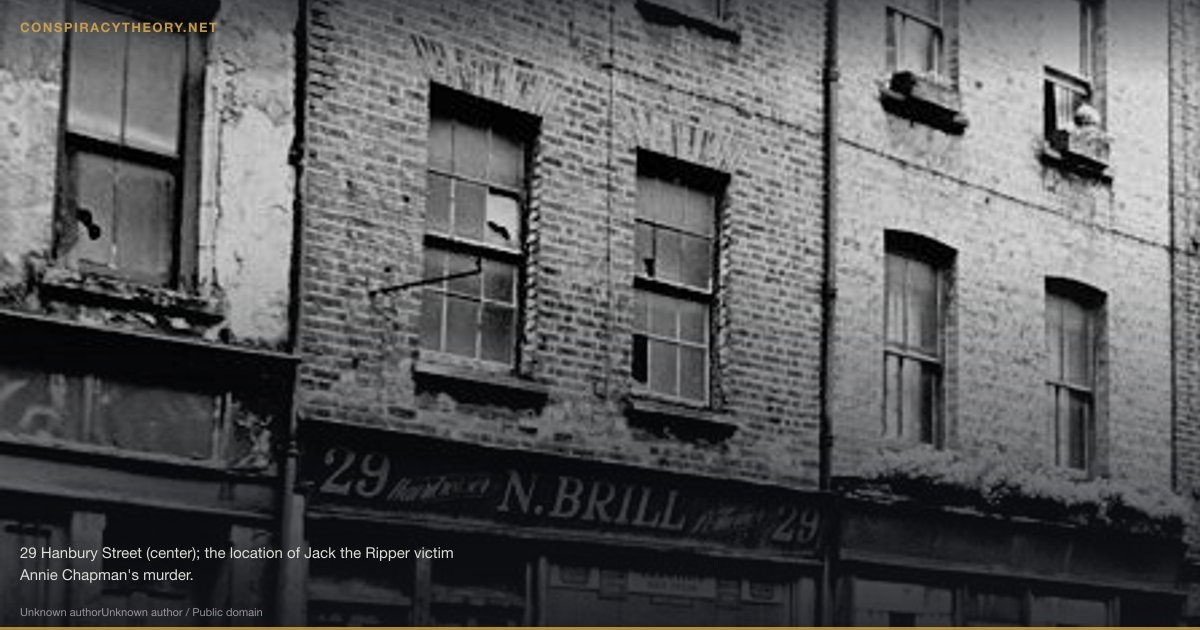
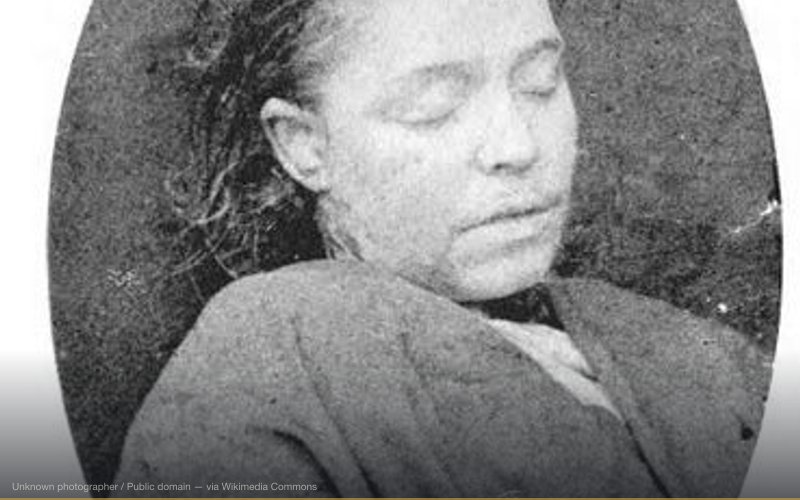
- Annie Chapman — Found dead in the backyard of 29 Hanbury Street, September 8, 1888. Throat cut, abdomen entirely laid open, uterus removed.
- Elizabeth Stride — Found dead in Dutfield’s Yard, Berner Street, September 30, 1888. Throat cut, but no abdominal mutilation — possibly interrupted.
- Catherine Eddowes — Found dead in Mitre Square, also September 30, 1888 (the “Double Event”). Throat cut, face mutilated, kidney and part of the uterus removed.
- Mary Jane Kelly — Found dead in her room at 13 Miller’s Court, November 9, 1888. The most extensive mutilation of any victim — her body was essentially dismembered.
The escalating violence, the removal of organs, and the killer’s apparent anatomical knowledge (debated then and now) shaped every subsequent theory about who the Ripper might have been.
The Police Suspects
The original investigators left behind private memoranda naming their own preferred suspects. These three names — often called the “police suspects” — remain central to modern Ripperology.
Montague John Druitt
Sir Melville Macnaghten, who became head of the Metropolitan Police CID in 1889, wrote a confidential memorandum in 1894 naming three suspects. His preferred candidate was Montague John Druitt, a 31-year-old barrister and cricket enthusiast who was found drowned in the Thames on December 31, 1888 — just weeks after the Kelly murder.
Macnaghten described Druitt as “sexually insane” and noted that his own family believed him to be the killer. The case for Druitt rests on timing: his death coincided roughly with the cessation of the murders. His mother had been committed to an asylum, suggesting possible hereditary mental illness by the standards of the era.
The case against Druitt is substantial. He had no known connection to Whitechapel. He was a middle-class barrister from a respectable Dorset family — an unlikely figure to be prowling the East End slums. No physical evidence links him to any of the crimes. Macnaghten, who joined the force a year after the murders, never personally investigated the case and appears to have relied on secondhand information. Some researchers suspect Druitt was dismissed from his teaching position at a Blackheath school for reasons unrelated to violence, possibly homosexuality, which was criminalized at the time.
Verdict: A candidate of convenience. The timing of his death is suggestive but far from conclusive, and nothing in Druitt’s known biography marks him as a likely serial killer.
Aaron Kosminski
The second of Macnaghten’s suspects was “Kosminski,” later identified as Aaron Kosminski, a Polish-Jewish hairdresser who emigrated to London in the early 1880s and lived in Whitechapel. Kosminski was committed to Colney Hatch Lunatic Asylum in 1891, where he remained until his death in 1919.
Chief Inspector Donald Swanson, who oversaw the day-to-day Ripper investigation, wrote marginalia in his copy of Assistant Commissioner Sir Robert Anderson’s memoirs identifying the suspect as “Kosminski” and claiming he had been taken to a police identification parade where a witness identified him but refused to testify — reportedly because both the witness and the suspect were Jewish.
Anderson himself wrote in his 1910 memoirs that the Ripper’s identity was “a definitely ascertained fact” and that the suspect was “a low-class Polish Jew.” This statement has been controversial for over a century, both for its antisemitic framing and for the question of whether Anderson was inflating his own success.
Kosminski lived in Whitechapel, which is more than can be said for most suspects. He was documented as having hallucinations and paranoid behavior. But asylum records describe him as largely harmless — he refused to eat food prepared by others and was noted for his “self-abuse” (masturbation), but he was never recorded as violent. He lived for another 28 years after committal, dying of gangrene in 1919.
The Kosminski theory received a massive boost in 2014 when amateur detective Russell Edwards and molecular biologist Jari Louhelainen announced they had matched mitochondrial DNA from a shawl supposedly found at the Catherine Eddowes murder scene to descendants of both Eddowes and Kosminski. The claim made international headlines. It also fell apart under scrutiny. Geneticists pointed out that the mitochondrial DNA sequence cited was actually a common one shared by millions of people of European descent, that the chain of custody for the shawl was nonexistent (it had been handled by unknown numbers of people over 126 years), and that the peer-reviewed paper contained an error in the DNA sequence itself. The scientific community largely rejected the finding.
Verdict: The strongest of the police suspects on circumstantial grounds — right place, right time, documented mental illness — but the 2014 DNA claim does not hold up, and asylum records paint a picture inconsistent with a violent killer.
Michael Ostrog
Macnaghten’s third suspect was Michael Ostrog, a Russian-born con man and thief who was intermittently confined to asylums. Ostrog has largely fallen out of favor as a suspect. Hospital records discovered in the 1990s show he was confined in a French asylum during the autumn of 1888, making it physically impossible for him to have committed the murders. Most serious Ripperologists have dropped him from consideration entirely.
The Royal Conspiracy
Prince Albert Victor and Sir William Gull
This is the Hollywood theory — the one that launched the graphic novel and film From Hell, and the one that has burrowed deepest into popular culture despite being among the least credible explanations.
The theory, in its fullest form: Prince Albert Victor, Duke of Clarence and grandson of Queen Victoria, secretly married a Catholic commoner named Annie Elizabeth Crook and fathered a child with her. When the Crown learned of this potentially dynasty-toppling scandal, Sir William Gull — Queen Victoria’s personal physician — was dispatched to silence the witnesses. The five Whitechapel victims were all women who knew about the secret marriage, and Gull murdered them in ritualistic fashion consistent with Masonic punishment, aided by a coachman named John Netley. The entire operation was overseen by the Prime Minister, Lord Salisbury, and covered up by the Metropolitan Police under Sir Charles Warren, himself a prominent Freemason.
The theory originated with Thomas Stowell’s 1970 article in The Criminologist, was expanded by journalist Stephen Knight in his 1976 book Jack the Ripper: The Final Solution, and reached its artistic peak in Alan Moore and Eddie Campbell’s extraordinary graphic novel From Hell (1989-1996), later adapted into a 2001 film starring Johnny Depp.
The problems are legion. Prince Albert Victor was at Balmoral Castle in Scotland during several of the murders — documented by the Court Circular, which tracked royal movements with obsessive precision. Sir William Gull had suffered a stroke in 1887 and was 71 years old in 1888; the idea of a partially paralyzed septuagenarian committing five frenzied knife murders in dark alleyways strains credulity. The key source for the conspiracy — Joseph Gorman, also known as Joseph Sickert, who claimed to be Annie Crook’s grandson — admitted in 1978 to the Sunday Times that he had fabricated the story. He later retracted his retraction, but the damage was done.
Despite being comprehensively debunked, the royal conspiracy endures because it is irresistible as narrative. It has everything: royalty, sex, religion, secret societies, institutional cover-ups, and the murder of the powerless to protect the powerful. Alan Moore understood this perfectly — From Hell is not really an argument that Gull did it but a meditation on how conspiracy narratives function, using the Ripper case as raw material.
For more on the royal angle, see British Royal Family Conspiracy Theories and Freemason Police and Judicial Networks.
The Artist: Walter Sickert
Crime novelist Patricia Cornwell became convinced that the German-born British painter Walter Sickert (1860-1942) was Jack the Ripper and spent an estimated $7 million pursuing the theory, including purchasing several Sickert paintings and having them destructively tested for DNA. Her 2002 book Portrait of a Killer: Jack the Ripper — Case Closed argued that Sickert’s dark, often violent paintings of women in shadowy rooms revealed a psychopathic obsession, and that his correspondence and artistic themes connected him to the murders.
Cornwell pointed to Sickert’s paintings of the Camden Town Murder (1907), his fascination with crime and theater, and alleged watermark matches between his stationery and some of the Ripper letters. She also claimed mitochondrial DNA from stamps on Ripper letters matched Sickert’s DNA.
The Ripperology community was largely unpersuaded. The mitochondrial DNA match was of the same low-specificity type that plagued the Kosminski claim — shared by a significant percentage of the European population. Sickert was documented as being in France during some of the murders. Art historians objected to the retroactive psychoanalysis of his paintings, noting that many Victorian artists depicted similar subjects. The watermark evidence was contested. And the assumption that the Ripper letters were genuine — rather than hoaxes, as most scholars believe — undermines the entire chain of evidence.
Cornwell’s investigation is nonetheless significant as a case study in how resources, determination, and genuine forensic effort can still fail to close a 135-year-old case. She brought more money and modern technology to the problem than anyone before or since, and the answer remained elusive.
The American: H.H. Holmes
In 2017, Jeff Mudgett — a lawyer who claimed to be the great-great-grandson of Herman Webster Mudgett, better known as H.H. Holmes, America’s first documented serial killer — proposed that Holmes had traveled to London and committed the Whitechapel murders before returning to the United States to build his infamous “Murder Castle” in Chicago.
The theory was promoted through a History Channel documentary series, American Ripper, which followed Mudgett and ex-CIA analyst Amaryllis Fox as they investigated the claim. The series made for entertaining television but struggled with a fundamental problem: Holmes’s travel records, passport applications, and documented activities in the United States in 1888 make a trip to London during the murder period extremely difficult to reconcile with the timeline.
Holmes was executed in 1896 for the murder of his business partner Benjamin Pitezel. He was undoubtedly a serial killer — his body count is debated but likely numbered at least nine. The idea that one of history’s most famous American killers was also history’s most famous British killer has an obvious dramatic appeal. But the evidence consists almost entirely of facial comparisons, handwriting analysis of disputed provenance, and family lore. Serious Ripperologists consider it one of the weaker theories.
”Jill the Ripper”
One of the more intriguing alternative theories proposes that the killer was not a man at all. The “Jill the Ripper” hypothesis suggests the murderer was a woman — possibly a midwife or abortionist — who would have been able to move through Whitechapel’s streets bloodstained and carrying instruments without attracting suspicion.
Sir Arthur Conan Doyle, creator of Sherlock Holmes, reportedly entertained this possibility. Inspector Frederick Abberline, who led the ground-level investigation, mentioned after his retirement that the theory had merit. A woman in the clothing of the era could have concealed a great deal of blood beneath dark skirts and a heavy cloak.
The theory has never coalesced around a single compelling suspect. Some proponents have named Mary Pearcey, who was hanged in 1890 for the murder of Phoebe Hogg and her infant daughter — a crime involving throat-cutting. Others have pointed to “Jill” as a generic figure: an abortionist whose clients were the canonical victims, killing them to conceal botched procedures or because they threatened to expose her.
The strength of the theory is its explanation for one of the case’s central mysteries: how the killer moved through densely populated streets without being seen covered in blood. Its weakness is the absence of any specific, evidence-backed suspect. It remains a fascinating thought experiment rather than a substantive lead.
The Letters
No discussion of the Ripper case is complete without addressing the letters — hundreds of them — received by police and newspapers during and after the murders. Three stand out:
The “Dear Boss” letter (September 27, 1888) — The letter that gave the killer his name. Addressed to the Central News Agency, it was signed “Jack the Ripper” and taunted police with details of the crimes. Most modern scholars believe it was written by a journalist, possibly Tom Bulling of the Central News Agency, to generate sensational copy.
The “Saucy Jacky” postcard (October 1, 1888) — Arrived the day after the “Double Event” (the murders of Stride and Eddowes), referencing the two killings and seemingly corroborating the “Dear Boss” letter. The speed of its arrival has been cited both for and against authenticity — it could indicate genuine foreknowledge, or it could mean a hoaxer sent it after reading early newspaper reports of the double murder.
The “From Hell” letter (October 16, 1888) — Sent to George Lusk, chairman of the Whitechapel Vigilance Committee, accompanied by half a preserved human kidney. The writer claimed to have taken it from Catherine Eddowes and to have “fried and ate” the other half. Unlike the other letters, “From Hell” was not signed “Jack the Ripper” and was written in a cruder hand. Some investigators, including Lusk himself, initially believed it was genuine. The kidney was examined by Dr. Thomas Openshaw of the London Hospital, who said it was a human kidney preserved in spirits, possibly from a woman of about 45 (Eddowes was 46). Other doctors disagreed, and the kidney was eventually lost.
The overwhelming consensus among modern researchers is that most or all of the letters were hoaxes — products of journalists, attention-seekers, and pranksters. The “From Hell” letter with its kidney remains the most debated, as it would have required access to a human organ, which was less easily obtained in 1888 than the other letters’ mere words.
The Birth of Modern True Crime
Whatever else the Ripper case accomplished, it fundamentally changed how society relates to murder. The Whitechapel killings were the first serial murder case to play out in the newly powerful penny press. Newspapers competed viciously for the most sensational coverage. Illustrations of the murder scenes — wildly inaccurate but thrillingly lurid — sold papers by the hundred thousand. The public devoured every detail with a mixture of horror and fascination that any modern true crime podcast listener would recognize instantly.
The case also exposed the class fault lines of Victorian London with brutal clarity. The victims were women in extreme poverty, living in one of the most deprived areas of the world’s wealthiest city. Their murders became national news not because of who they were but because of how they were killed. The press coverage, the public obsession, the police investigation — all of it operated on the implicit assumption that the killer must be extraordinary, because surely no ordinary criminal would butcher women in such a way. This assumption, Ripperologists have argued, may have been the investigation’s fatal flaw. The killer was almost certainly an ordinary resident of the East End, not a surgeon, not a royal, not a famous artist — just someone who lived in the neighborhood and knew its dark corners intimately.
Ripperology as a Field
The academic and hobbyist study of the Ripper case — Ripperology — is one of the most remarkable phenomena in the history of criminal investigation. Since the 1960s, thousands of books have been published proposing suspects, reanalyzing evidence, and debating interpretations. Conferences are held. Journals are published. Walking tours of Whitechapel generate millions in tourist revenue annually.
The field has produced genuine scholarship: the rediscovery of police files, the identification and correction of errors in earlier accounts, the contextual work placing the murders in the broader history of Victorian poverty and policing. It has also produced an enormous amount of motivated reasoning, confirmation bias, and what one critic called “suspect-driven history” — researchers who begin with a suspect and work backward to build a case, rather than following evidence to a conclusion.
The Ripper case is, in some sense, the original cold case investigation, the template for every true crime obsession that followed. It is also a reminder that some cases simply cannot be solved — that the passage of time, the loss of evidence, and the death of every possible witness can place a crime permanently beyond the reach of certainty.
Timeline
| Date | Event |
|---|---|
| August 31, 1888 | Mary Ann Nichols found murdered on Buck’s Row — first canonical victim |
| September 8, 1888 | Annie Chapman found murdered at 29 Hanbury Street |
| September 27, 1888 | ”Dear Boss” letter received by Central News Agency — first use of “Jack the Ripper” |
| September 30, 1888 | ”Double Event” — Elizabeth Stride and Catherine Eddowes murdered on the same night |
| October 16, 1888 | ”From Hell” letter and half a kidney sent to George Lusk |
| November 9, 1888 | Mary Jane Kelly found murdered at 13 Miller’s Court — the most mutilated victim |
| December 31, 1888 | Montague John Druitt’s body found in the Thames |
| 1891 | Aaron Kosminski committed to Colney Hatch Asylum |
| 1892 | Metropolitan Police officially close the Ripper investigation |
| 1894 | Sir Melville Macnaghten writes his memorandum naming three suspects |
| 1910 | Sir Robert Anderson claims the Ripper’s identity was “definitely ascertained” |
| 1970 | Thomas Stowell publishes article implicating Prince Albert Victor |
| 1976 | Stephen Knight publishes Jack the Ripper: The Final Solution (royal conspiracy) |
| 1988 | Centenary of the murders sparks massive resurgence in Ripperology |
| 1989-1996 | Alan Moore and Eddie Campbell publish From Hell graphic novel |
| 2002 | Patricia Cornwell publishes Portrait of a Killer accusing Walter Sickert |
| 2014 | Russell Edwards and Jari Louhelainen announce DNA match to Aaron Kosminski — later widely disputed |
| 2017 | American Ripper documentary series proposes H.H. Holmes as the Ripper |
| 2019 | Further DNA analysis continues to produce contested results |
Why It Will Never Be Solved
The honest answer, the one that Ripperologists sometimes resist because it would put them out of business, is that the case is almost certainly unsolvable. The original crime scenes were not preserved by modern standards. Physical evidence was handled, lost, or destroyed. Every witness is dead. The police files, while more extensive than popularly believed, contain no smoking gun — if they did, we would know.
The DNA approaches, while scientifically innovative, are hampered by chain-of-custody problems that no amount of laboratory precision can overcome. You cannot reliably extract meaningful forensic DNA from items that have been handled by unknown numbers of people over more than a century. Even if a perfect DNA match were somehow obtained, it would prove contact with an object, not commission of a murder.
What remains is a mystery that functions almost as a Rorschach test. Every generation sees its own anxieties reflected in the suspect they favor: Victorian fears of immigrants and the poor; early twentieth-century fascination with the aristocracy; late twentieth-century distrust of institutions and secret societies; twenty-first century faith in the power of DNA and forensic science to resolve anything.
Jack the Ripper, whoever he was, committed five or more murders in the space of ten weeks and vanished. The rest is interpretation, projection, and the endlessly compelling human need to put a face on the darkness.
Sources & Further Reading
- Evans, Stewart P., and Keith Skinner. The Ultimate Jack the Ripper Companion: An Illustrated Encyclopedia. Carroll & Graf, 2000.
- Begg, Paul. Jack the Ripper: The Definitive History. Pearson Education, 2003.
- Rumbelow, Donald. The Complete Jack the Ripper. Penguin, 2004.
- Knight, Stephen. Jack the Ripper: The Final Solution. George G. Harrap, 1976.
- Moore, Alan, and Eddie Campbell. From Hell. Top Shelf Productions, 1999.
- Cornwell, Patricia. Portrait of a Killer: Jack the Ripper — Case Closed. Putnam, 2002.
- Louhelainen, Jari, and David Miller. “Forensic Investigation of a Shawl Linked to the Jack the Ripper Murders.” Journal of Forensic Sciences 64, no. 6 (2019).
- Marriott, Trevor. Jack the Ripper: The 21st Century Investigation. John Blake, 2005.
- Sugden, Philip. The Complete History of Jack the Ripper. Carroll & Graf, 2002.
- Macnaghten Memorandum (1894), held at the National Archives, Kew.
Related Theories
- British Royal Family Conspiracy Theories — The royal Ripper theory is one of the oldest and most famous conspiracies involving the British monarchy
- Freemason Police and Judicial Networks — The Masonic cover-up angle is central to the Knight/Moore version of the royal conspiracy
- Freemasonry Conspiracy — Alleged Masonic ritual elements in the Ripper murders and the police cover-up
- Princess Diana Murder — Another iconic British conspiracy involving claims of institutional murder and royal cover-ups
- Famous Disappearances — Other cases where identity or fate remains unknown
- Lord Lucan Disappearance — Another legendary unsolved British case involving murder and a vanished suspect
Frequently Asked Questions
Has Jack the Ripper ever been definitively identified?
Was Jack the Ripper a member of the Royal Family?
How many victims did Jack the Ripper kill?

Infographic
Share this visual summary. Right-click to save.
