Ivermectin COVID-19 Suppression
Overview
“You are not a horse. You are not a cow. Seriously, y’all. Stop it.” That August 2021 tweet from the FDA’s official account, complete with a link about why people should not use ivermectin to treat COVID-19, may be the most consequential piece of social media sarcasm in regulatory history. It was factually misleading (ivermectin has extensive human medical use), dripping with condescension, and it did more to galvanize the ivermectin movement than anything its proponents had managed on their own.
The ivermectin saga is, depending on whom you ask, either the story of a cheap, safe, Nobel Prize-winning wonder drug ruthlessly suppressed by pharmaceutical companies protecting billions in vaccine and antiviral revenue, or the story of a promising early hypothesis that collapsed under rigorous testing while a political movement built an unfalsifiable conspiracy theory around it. The uncomfortable truth is that the narrative contains genuine elements of both — real institutional failures and real scientific dead ends, braided together so tightly that separating them requires more nuance than most participants on either side were willing to deploy.
What makes this story genuinely complex, rather than a straightforward debunking exercise, is the constellation of legitimate grievances surrounding it: documented regulatory capture by pharmaceutical companies, the FDA’s own history of approving dangerous drugs while slow-walking generics, a pandemic response that sometimes prioritized messaging consistency over scientific transparency, and a social media censorship regime that suppressed not just misinformation but also legitimate scientific debate. All of this was real. None of it made ivermectin work against COVID-19.
Origins & History
Ivermectin’s origin story is genuinely remarkable. In the 1970s, Japanese microbiologist Satoshi Omura isolated a bacterium from a soil sample near a golf course in Ito, Japan. Working with William Campbell at Merck, they developed ivermectin, which proved astonishingly effective against parasitic worms. The drug has since been administered billions of times across the developing world, virtually eradicating river blindness in several African countries. Omura and Campbell shared the 2015 Nobel Prize in Physiology or Medicine for its discovery. It is, without question, one of the most important drugs in the history of medicine.
The COVID-19 chapter began in April 2020, when a team of Australian researchers published an in vitro study showing ivermectin could inhibit SARS-CoV-2 replication in cell cultures. The paper, published in Antiviral Research, generated immediate excitement. There was a catch, though, and it was significant: the concentration of ivermectin required to achieve antiviral effects in the petri dish was roughly 35 to 100 times higher than what could be safely achieved in human blood plasma at approved doses. Many compounds kill viruses in vitro at concentrations that would kill the patient — bleach, for instance, is a highly effective antiviral in a test tube.
Nevertheless, the finding sparked a wave of clinical trials, particularly in Latin America, Egypt, and parts of Asia, where ivermectin was cheap, widely available, and doctors were desperate for any tool against a virus that was overwhelming their healthcare systems. Several early observational studies and small randomized trials appeared to show benefit, and a network of physician advocates began promoting the drug.
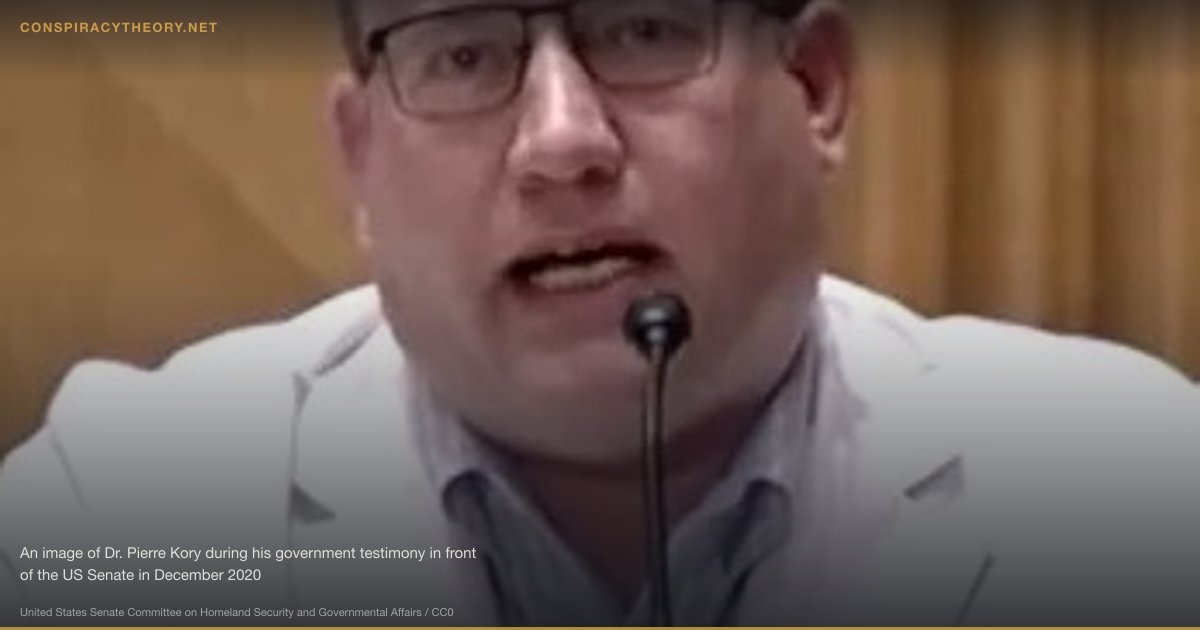
The most prominent advocacy group was the Front Line COVID-19 Critical Care Alliance (FLCCC), led by pulmonologist Pierre Kory. In December 2020, Kory delivered impassioned testimony before a U.S. Senate committee, calling ivermectin a “miracle drug” and pleading for its adoption. The video went viral, amassing millions of views before being removed by YouTube for violating medical misinformation policies — a removal that, to ivermectin supporters, proved the very suppression Kory was describing.
The situation escalated throughout 2021. In India, several states adopted ivermectin as part of their COVID treatment protocols during the devastating Delta wave, and proponents pointed to declining case counts as evidence. Critics noted that case counts declined for many reasons — including the natural trajectory of epidemic waves — and that Indian states that did not use ivermectin saw similar declines.
Then the studies started falling apart.
Key Claims
The ivermectin-as-suppressed-cure theory makes several interconnected claims:
-
Ivermectin is a proven effective treatment for COVID-19 that could have saved hundreds of thousands of lives if widely adopted early in the pandemic. Advocates point to dozens of studies, meta-analyses, and real-world data from countries that adopted it.
-
The FDA and health authorities suppressed ivermectin because its approval as a COVID treatment would have legally invalidated the Emergency Use Authorizations (EUAs) for COVID vaccines, which required that no adequate approved alternative treatments existed.
-
Pharmaceutical companies had a financial motive to suppress a cheap generic drug. Ivermectin costs pennies per dose; COVID vaccines generated over $100 billion in revenue for Pfizer, Moderna, and other manufacturers. Merck, ivermectin’s original developer, stood to profit more from its new antiviral molnupiravir ($700 per course) than from its own off-patent drug.
-
Social media censorship proved the conspiracy. Platforms removed ivermectin content, medical boards threatened doctors who prescribed it, and pharmacies refused to fill prescriptions — all of which, advocates argued, constituted coordinated suppression rather than legitimate public health messaging.
-
The “horse dewormer” narrative was deliberately crafted to discredit a legitimate human medication. By associating ivermectin with veterinary use, media and regulators stigmatized patients and doctors who used it.
Evidence
The Clinical Trial Evidence
This is where the story gets scientifically definitive, even if the political story remains murky.
The early studies favoring ivermectin suffered from a pattern of problems that became increasingly clear as scrutiny intensified. A pivotal moment came in July 2021, when a medical student and data detective named Jack Lawrence discovered that a large Egyptian study by Ahmed Elgazzar — one of the most influential pro-ivermectin papers, heavily weighted in multiple meta-analyses — contained fabricated data. Entire blocks of patient records were duplicated. The study was retracted. When it was removed from meta-analyses, several that had shown ivermectin benefit flipped to showing no significant effect.
This was not an isolated incident. The Surgisphere debacle had already shaken confidence: a mysterious analytics company had published data purporting to show hydroxychloroquine dangers, which was retracted from The Lancet when the underlying data could not be verified. The same company had published ivermectin data. The broader problem was that many early ivermectin studies came from settings with limited research infrastructure, insufficient blinding, and in some cases, apparent fraud.
The definitive answers came from large, well-designed, rigorously conducted trials:
-
TOGETHER Trial (Brazil, 2022): A platform trial of 3,515 patients found no significant benefit from ivermectin for preventing hospitalization or extended emergency department observation. Published in the New England Journal of Medicine.
-
ACTIV-6 Trial (United States, 2022-2023): A National Institutes of Health-funded trial testing ivermectin at standard and high doses found no improvement in time to recovery. Published in JAMA.
-
COVID-OUT Trial (United States, 2022): A University of Minnesota trial found no benefit from ivermectin for preventing hospitalization, published in the New England Journal of Medicine.
-
PRINCIPLE Trial (United Kingdom, 2022): Found no evidence of meaningful benefit from ivermectin for reducing hospitalization or death.
These were not underfunded studies from obscure journals. They were large, randomized, placebo-controlled, double-blinded trials conducted by major research institutions and published in the most prestigious medical journals in the world. The consistent finding was the same: ivermectin does not meaningfully help COVID-19 patients.
The Suppression Question
The conspiracy claim is harder to evaluate because it mixes verifiable institutional failures with unfounded inference.
What is true: Pharmaceutical companies absolutely had financial incentives to promote expensive patented drugs over cheap generics. The FDA’s EUA framework did create a structural disincentive against recognizing existing treatments. Social media platforms did remove content discussing ivermectin, including some content that was scientifically legitimate or represented reasonable medical debate. The FDA’s “horse dewormer” messaging was reductive and counterproductive, stigmatizing a legitimate human medication and the patients taking it. Some state medical boards did threaten to discipline doctors for prescribing ivermectin, raising legitimate questions about medical autonomy.
What is not true: That these institutional failures prove ivermectin works. The drug received extensive testing — far more than most repurposing candidates — precisely because of the intense public interest. The consistent negative results from rigorous trials are not explained by pharmaceutical conspiracy. Researchers in dozens of countries, including those with no financial connection to vaccine manufacturers, independently found no meaningful benefit.
The Andrew Hill affair added a particularly disturbing wrinkle. Hill, a University of Liverpool researcher, had conducted a meta-analysis showing ivermectin benefit. According to his own account, he was pressured by Unitaid (a WHO-affiliated organization that was funding his research) to alter his conclusions. A documentary captured Hill apparently acknowledging this pressure. However, the studies his meta-analysis relied upon were later found to include fraudulent data, meaning the revised negative conclusion was actually the correct one — even if the process of arriving there was compromised.
Cultural Impact
The ivermectin debate became one of the defining cultural flashpoints of the COVID-19 pandemic, transcending the specific pharmacological question and becoming a proxy war for much larger conflicts about institutional trust, medical autonomy, censorship, and the politicization of science.
Joe Rogan’s September 2021 announcement that he had taken ivermectin (among other treatments) after testing positive for COVID turned the drug into a culture-war totem. CNN’s repeated description of his treatment as “horse dewormer” — technically misleading, since Rogan took the human pharmaceutical form prescribed by a doctor — prompted Rogan to threaten legal action and sparked a broader media credibility crisis. The incident became a case study in how mainstream media’s imprecision fueled the very distrust it was trying to combat.
The controversy also exposed fault lines within the medical establishment. Organizations like the FLCCC positioned themselves as heroic dissidents, drawing parallels to historical cases where medical orthodoxy was wrong — the discovery of H. pylori as the cause of ulcers, the slow recognition of hand-washing, the suppression of generic cancer treatments. These parallels, while emotionally compelling, ignored a crucial distinction: in those historical cases, the suppressed treatment eventually proved effective in rigorous trials. Ivermectin did not.
The legacy is a deepened distrust of public health institutions that extends well beyond COVID. Polls consistently show that public confidence in the FDA, CDC, and pharmaceutical companies declined significantly during the pandemic, and the ivermectin episode was a major contributing factor. Whether that distrust will translate into resistance to future legitimate public health measures — a concern that haunts epidemiologists — remains to be seen.
The FDA itself appeared to acknowledge its misstep. In 2023, a federal court ruled that the FDA had overstepped its authority in its social media posts discouraging ivermectin use, finding that the agency’s messaging went beyond informational guidance into improperly telling doctors how to practice medicine.
Timeline
- 1975 — Satoshi Omura isolates the bacterium that will yield ivermectin
- 1981 — Ivermectin approved for veterinary use
- 1987 — Ivermectin approved for human use against river blindness
- 2015 — Omura and Campbell win Nobel Prize for ivermectin discovery
- April 2020 — Australian in vitro study shows ivermectin inhibits SARS-CoV-2 in cell cultures
- Mid-2020 — Early clinical trials begin in Latin America, Egypt, and Asia
- December 2020 — Pierre Kory testifies before U.S. Senate, calling ivermectin a “miracle drug”; video goes viral
- January 2021 — NIH upgrades ivermectin position from “against” to “neutral” (insufficient evidence to recommend for or against)
- March 2021 — WHO recommends against ivermectin for COVID outside clinical trials
- July 2021 — Key Egyptian study (Elgazzar) revealed to contain fabricated data, retracted
- August 2021 — FDA tweets “You are not a horse” anti-ivermectin message; Joe Rogan takes ivermectin after COVID diagnosis
- September 2021 — CNN-Rogan “horse dewormer” controversy
- March 2022 — TOGETHER trial published in NEJM showing no benefit
- 2022-2023 — ACTIV-6, COVID-OUT, PRINCIPLE trials all show no meaningful benefit
- 2023 — Federal court rules FDA overstepped authority in anti-ivermectin social media posts
Sources & Further Reading
- Reis, Gilmar, et al. “Effect of Early Treatment with Ivermectin among Patients with Covid-19.” New England Journal of Medicine 386 (2022): 1721-1731.
- Naggie, Susanna, et al. “Effect of Higher-Dose Ivermectin for 6 Days vs Placebo on Time to Sustained Recovery in Outpatients With COVID-19.” JAMA 329, no. 10 (2023): 888-897.
- Caly, Leon, et al. “The FDA-approved drug ivermectin inhibits the replication of SARS-CoV-2 in vitro.” Antiviral Research 178 (2020): 104787.
- Lawrence, Jack. “The Elgazzar ivermectin study: a case study in data integrity.” Nature Medicine 27 (2021).
- BBC documentary: Ivermectin: The Drug That Divided the World. 2022.
- Aris Katzourakis. “Correspondence: Lessons from ivermectin.” Nature 602 (2022).
Related Theories
- COVID-19 Conspiracy Theories — The broader landscape of pandemic conspiracies
- Anti-Vaccination Movement — Skepticism toward COVID vaccines
- Pharmaceutical Suppression — Broader claims of Big Pharma suppressing cures
- Myocarditis and Vaccines — Concerns about COVID vaccine side effects
Frequently Asked Questions
Does ivermectin work against COVID-19?
Was ivermectin suppressed to protect vaccine Emergency Use Authorizations?
Is ivermectin just a 'horse dewormer'?
Why did the ivermectin debate become so politically charged?

Infographic
Share this visual summary. Right-click to save.
