Banking Corruption and Financial System Conspiracy

Overview
The banking corruption conspiracy encompasses a broad and layered set of claims about the global financial system — ranging from well-documented criminal conduct by major banks to sweeping allegations that the entire architecture of modern finance is designed to concentrate wealth and power in the hands of a small elite. Unlike many conspiracy theories that rest on speculation, the banking corruption narrative draws significant strength from a long and verifiable record of institutional malfeasance: rate rigging, money laundering for criminal organizations, market manipulation, and regulatory capture. At the same time, the theory extends well beyond documented wrongdoing into claims about deliberate systemic design, intergenerational banking dynasties orchestrating global events, and the fundamental illegitimacy of central banking and fractional reserve lending.
This theory occupies an unusual position in the conspiracy landscape because so many of its component claims have been confirmed. Major international banks have paid hundreds of billions of dollars in fines and settlements since the 2008 financial crisis for conduct that was, by any measure, criminal. The LIBOR scandal, the forex manipulation scheme, the mortgage-backed securities fraud that triggered the global financial crisis, and the systematic laundering of drug cartel money are not allegations — they are matters of legal record. The conspiratorial element enters when these documented instances are interpreted not as failures of regulation or the misconduct of individual institutions, but as evidence of a coordinated, centuries-old plan to enslave populations through debt and monetary control.
The theory is classified as mixed because it sits at the intersection of confirmed institutional criminality and unsubstantiated claims about centralized design. The documented evidence of banking corruption is extensive and damning. The leap from “banks have repeatedly broken the law and faced inadequate consequences” to “the entire financial system is a deliberate conspiracy against humanity” is where the theory moves from the evidentiary into the speculative.
Origins & History
The Bank of England and Early Central Banking (1694)
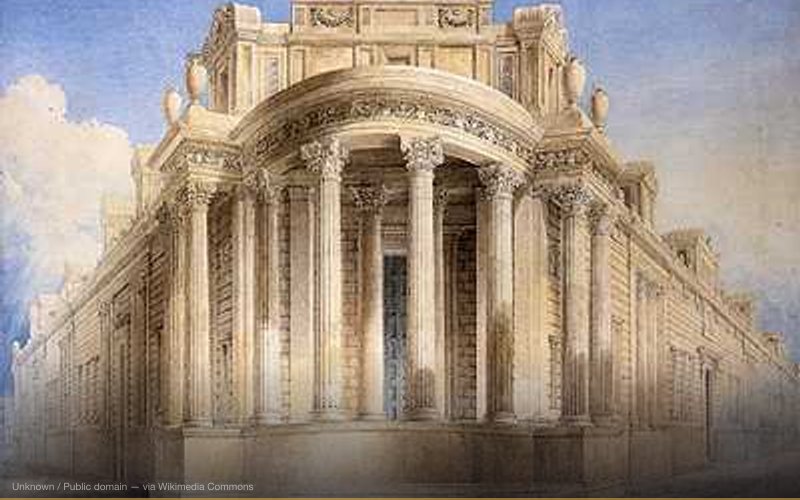
The origins of banking conspiracy theories are inseparable from the origins of central banking itself. The Bank of England, established in 1694, was created as a private institution granted the exclusive right to issue banknotes in exchange for lending money to the government of William III to fund a war against France. From the outset, critics objected to the arrangement: a private institution was being granted the power to create money, lend it to the government at interest, and profit from the nation’s debt. The fundamental structure — private creation of public money, with interest — has remained a core grievance of banking conspiracy theorists for over three centuries.
Throughout the 18th and 19th centuries, the expansion of central banking across Europe generated persistent opposition. Critics argued that granting private or quasi-private institutions the power to control the money supply gave bankers influence over governments that no unelected body should possess. These objections were not confined to the fringes. Thomas Jefferson wrote extensively about the dangers of banking institutions, warning that “banking establishments are more dangerous than standing armies.” Andrew Jackson made the destruction of the Second Bank of the United States a centerpiece of his presidency, vetoing its recharter in 1832 with a message that explicitly accused the bank of concentrating power in the hands of a “few monied capitalists.”
The Rothschild Dynasty and 19th-Century Banking Power
The Rothschild banking family, which rose to prominence in the late 18th and early 19th centuries, became the most enduring symbol of alleged banking conspiracy. Founded by Mayer Amschel Rothschild in Frankfurt, the family established banking operations across Europe, with sons stationed in London, Paris, Vienna, Naples, and Frankfurt. The Rothschilds financed governments, facilitated international trade, and accumulated immense wealth during a period of European wars and industrialization.
The family’s real and substantial financial influence became the basis for conspiracy theories that attributed to the Rothschilds near-total control over European governments and economies. The apocryphal quote attributed to Nathan Mayer Rothschild — “Give me control of a nation’s money supply, and I care not who makes its laws” — though almost certainly fabricated, became a foundational text of banking conspiracy literature. The legend that Nathan Rothschild made a fortune by manipulating British government bond prices after receiving early news of the Battle of Waterloo in 1815 has been repeated in countless conspiracy narratives, though historians have questioned the scale and details of the account.
It is essential to note that much of the historical conspiracy theorizing about the Rothschilds and “international bankers” drew on and reinforced antisemitic tropes. The conflation of Jewish identity with financial manipulation has deep roots in European history, and modern scholars such as Niall Ferguson have documented how legitimate criticism of banking power was frequently intertwined with anti-Jewish prejudice. Any examination of banking conspiracy theories must acknowledge this history while distinguishing between substantive critiques of financial institutions and narratives rooted in ethnic prejudice.
The Federal Reserve and Jekyll Island (1913)
The creation of the United States Federal Reserve System in 1913 is perhaps the single most cited event in banking conspiracy literature. The Federal Reserve Act established a central banking system for the United States after a series of financial panics — most notably the Panic of 1907 — demonstrated the instability of a banking system without a lender of last resort.
The conspiratorial narrative focuses on the secret meeting at Jekyll Island, Georgia, in November 1910, where a group of bankers and political figures — including Senator Nelson Aldrich, representatives of J.P. Morgan, the Rockefeller banking interests, and Paul Warburg of the Kuhn, Loeb investment bank — gathered to draft what would become the framework for the Federal Reserve. The meeting was genuinely secret; participants used first names only and concealed the purpose of their trip. This secrecy is a matter of historical record, confirmed by participants themselves in later accounts.
Critics argue that the Federal Reserve was designed from its inception to serve private banking interests rather than the public. The system’s structure — a network of twelve regional Federal Reserve Banks that are technically owned by their member banks, overseen by a Board of Governors appointed by the president — is cited as evidence that the institution is fundamentally a private entity cloaked in the appearance of public accountability. Defenders counter that the Fed’s governance structure, while unusual, includes meaningful public oversight through Senate confirmation of governors, congressional reporting requirements, and the dual mandate to promote maximum employment and price stability.
The 20th Century: Expansion and Critique
Throughout the 20th century, the growing complexity and interconnectedness of the global financial system provided new material for banking conspiracy narratives. The Great Depression, which saw the failure of thousands of banks and the impoverishment of millions, was interpreted by some as a deliberately engineered crisis designed to consolidate banking power. Congressman Louis T. McFadden, chairman of the House Banking Committee, made speeches in the early 1930s accusing the Federal Reserve of deliberately causing the Depression. While McFadden’s specific claims were not supported by evidence, the broader question of whether Federal Reserve policy failures contributed to the Depression’s severity has been a subject of serious economic debate, with scholars including Milton Friedman and Anna Schwartz arguing that the Fed’s contractionary monetary policy significantly worsened the crisis.
The Bretton Woods Conference of 1944, which established the International Monetary Fund (IMF) and the World Bank, and the subsequent Nixon Shock of 1971, which ended the dollar’s convertibility to gold, further fueled conspiracy narratives about a planned erosion of monetary integrity. The shift from gold-backed currency to fiat money — money backed only by government decree and public confidence — remains one of the most contested issues in banking conspiracy discourse.
Key Claims
Banking corruption conspiracy theories encompass a wide spectrum of claims, ranging from those with substantial documented support to those that are speculative or unfounded.
-
Rate rigging and market manipulation: Major banks systematically manipulated benchmark interest rates (LIBOR), foreign exchange rates, and commodity prices for profit, with regulatory bodies either complicit or negligent. This claim is confirmed.
-
Money laundering for criminal enterprises: Global banks knowingly processed hundreds of billions of dollars for drug cartels, sanctioned nations, and terrorist organizations, facing fines that amounted to a fraction of the profits generated. This claim is confirmed.
-
Regulatory capture: Financial regulators are effectively controlled by the institutions they are meant to oversee, through revolving-door hiring practices, lobbying, and campaign contributions. This claim has substantial supporting evidence.
-
Too big to fail / too big to jail: The largest banks operate with an implicit government guarantee, knowing they will be rescued with public funds in a crisis, while their executives face no personal criminal liability for institutional crimes. This claim is substantially supported.
-
Fractional reserve banking as legalized fraud: The banking system’s ability to create money through lending — issuing loans that far exceed actual deposits — constitutes a form of institutionalized deception that transfers wealth from the public to bankers. This claim is a matter of economic debate, not fraud in any legal sense.
-
Central banks serve private interests, not the public: The Federal Reserve and other central banks are designed to protect banking profits and bondholder wealth, with policies like quantitative easing enriching asset holders at the expense of wage earners and savers. This claim is debated among economists.
-
Deliberate engineering of financial crises: Economic collapses are intentionally created by banking elites to buy distressed assets cheaply, consolidate market share, and justify expanded government and central bank powers. This claim lacks credible supporting evidence as a coordinated strategy, though individual instances of crisis profiteering are documented.
-
Intergenerational banking dynasty control: Families such as the Rothschilds, Morgans, Warburgs, and Rockefellers maintain secret, coordinated control over the global financial system across generations. This claim lacks credible evidence and frequently relies on antisemitic source material.
Evidence
Confirmed Banking Misconduct
The evidentiary record of banking corruption is unusually strong compared to most conspiracy theories. The following represent documented, legally adjudicated cases:
LIBOR Manipulation (2003-2012): The London Interbank Offered Rate, a benchmark interest rate used to set prices on an estimated $350 trillion in financial products worldwide, was systematically manipulated by traders at major banks including Barclays, UBS, Deutsche Bank, Rabobank, and the Royal Bank of Scotland. Traders colluded via electronic messages to submit false rate estimates to benefit their trading positions. The scandal resulted in over $9 billion in regulatory fines, criminal charges against individual traders, and a fundamental restructuring of how benchmark rates are set. The U.S. Commodity Futures Trading Commission, the UK Financial Conduct Authority, and other regulators concluded that the manipulation was widespread, long-running, and involved coordination between competing banks.
HSBC Money Laundering (2012): A U.S. Senate investigation found that HSBC had allowed at least $881 million in drug trafficking proceeds from Mexican and Colombian cartels to be laundered through its accounts, had facilitated transactions for banks in sanctioned countries including Iran, Libya, Sudan, and Cuba, and had provided banking services to Saudi Arabian banks linked to terrorist financing. HSBC paid $1.9 billion in a deferred prosecution agreement — at the time the largest fine ever levied against a bank — but no senior executives were criminally charged. A U.S. Senate report noted that the bank had been warned about its anti-money-laundering deficiencies repeatedly over the preceding decade.
Wachovia / Wells Fargo Drug Money (2010): Wachovia Bank, later acquired by Wells Fargo, admitted to processing $378.4 billion in transactions linked to Mexican drug trafficking between 2004 and 2007. The bank paid $160 million in fines — less than 2% of its $12.3 billion profit for 2009. No criminal charges were filed against any individual.
Deutsche Bank Mirror Trading (2017): Deutsche Bank was fined $630 million by U.S. and UK regulators for a Russian money-laundering scheme involving “mirror trades” — matching buy and sell orders in Moscow and London that moved approximately $10 billion out of Russia between 2011 and 2015.
Forex Manipulation (2013-2015): Six major banks — Barclays, Citigroup, JP Morgan, the Royal Bank of Scotland, UBS, and Bank of America — were fined a combined $5.8 billion for conspiring to manipulate foreign exchange rates. Traders at competing banks communicated via private chat rooms with names like “The Cartel” and “The Bandits’ Club” to coordinate trading strategies that rigged benchmark currency rates.
Mortgage-Backed Securities Fraud (2008-2016): In the aftermath of the 2008 financial crisis, investigations revealed that major banks had knowingly packaged and sold mortgage-backed securities they internally recognized as defective. Internal communications showed bank employees referring to the products they were selling as “junk,” “dogs,” and “a sack of s---.” Banks paid a combined total exceeding $150 billion in fines and settlements, including $13 billion from JP Morgan, $16.65 billion from Bank of America, and $5.06 billion from Goldman Sachs.
The “Too Big to Jail” Pattern
A recurring feature of these cases that lends credibility to systemic corruption claims is the near-total absence of criminal prosecution for senior bank executives. Despite institutional fines amounting to hundreds of billions of dollars, criminal charges have been overwhelmingly limited to mid-level traders and compliance officers. U.S. Attorney General Eric Holder acknowledged in 2013 congressional testimony that the size of some financial institutions made prosecution difficult, stating that their size “has an inhibiting impact on our ability to bring resolutions that I think would be more appropriate.” This statement was widely interpreted as confirmation that the largest banks were, in practice, above criminal law.
In 2012, Assistant Attorney General Lanny Breuer stated that potential collateral consequences to the financial system were a factor in prosecution decisions. The Department of Justice’s own inspector general later criticized the department for failing to prioritize the prosecution of senior financial executives following the 2008 crisis.
Regulatory Revolving Door
The movement of personnel between regulatory agencies and the banks they regulate is extensively documented. Multiple chairs and senior officials of the Securities and Exchange Commission, the Commodity Futures Trading Commission, and the Treasury Department have moved to or from positions at Goldman Sachs, Citigroup, and other major banks. While defenders argue this movement reflects the specialized expertise required for financial regulation, critics point to it as evidence that regulators are structurally aligned with the institutions they oversee.
Debunking / Verification
What Is Confirmed
The documented record of banking misconduct is not a conspiracy theory — it is a matter of court records, regulatory findings, and institutional admissions. Banks have been caught manipulating rates, laundering money, defrauding customers, and exploiting regulatory weakness. The scale of fines paid — exceeding $300 billion by major banks since 2008 — speaks to the breadth of the misconduct. The pattern of institutional fines without individual criminal accountability for senior executives is a legitimate subject of public concern and policy debate.
What Remains Unsubstantiated
Several broader claims made within the banking corruption conspiracy framework lack supporting evidence:
-
Coordinated, centralized control: While major banks have been caught colluding on specific activities (LIBOR, forex), no evidence supports the claim that the global financial system operates under a unified, secretly coordinated plan directed by a small cabal. Banks compete aggressively with one another, lobby for opposing policies, and regularly suffer losses that no rational conspirator would permit.
-
Deliberate crisis engineering: The 2008 financial crisis, for example, devastated the balance sheets of the banks at its center. Lehman Brothers was destroyed entirely. Bear Stearns was sold at a fraction of its previous value. While some institutions profited from the crisis — notably Goldman Sachs, which had hedged against the mortgage market — the pattern is more consistent with reckless risk-taking and regulatory failure than with deliberate planning.
-
Dynastic control narratives: Claims about Rothschild or Rockefeller families secretly controlling global finance overstate the influence of any single family and typically rely on outdated or fabricated source material. While these families were historically influential in banking, the modern financial system involves thousands of institutions, sovereign wealth funds, pension funds, and regulatory bodies whose interactions are far too complex and competitive to be directed by any single entity.
-
Fractional reserve as fraud: The characterization of fractional reserve banking as inherently fraudulent misrepresents its function. The system operates under legal frameworks, is subject to regulatory capital requirements, and is understood by depositors through deposit insurance mechanisms. Whether it is the optimal monetary arrangement is a legitimate debate; calling it fraud is a rhetorical claim, not a factual one.
The Core Tension
The central challenge of the banking corruption conspiracy is that enough of it is true to make the rest seem plausible. When banks are documented to have laundered drug money, rigged interest rates, and sold fraudulent securities — all while their executives avoided prison — the claim that “the system is rigged” resonates with lived experience. The gap between documented corruption and conspiratorial claims about secret dynastic control is narrower than in most conspiracy theories, which is precisely what makes this narrative so persistent and so difficult to evaluate in binary terms.
Cultural Impact
Political Movements
Banking corruption claims have fueled political movements across the ideological spectrum. The Occupy Wall Street movement (2011) drew on widespread anger about bank bailouts and inequality, popularizing the framing of “the 99% vs. the 1%.” The Tea Party movement, while ideologically distinct, shared the critique of bank bailouts as evidence of a corrupt alliance between government and financial institutions. The 2016 presidential campaigns of both Bernie Sanders (on the left) and Donald Trump (on the right) incorporated banking corruption themes, with Sanders calling for breaking up “too big to fail” banks and Trump accusing Wall Street of rigging the system.
Internationally, the anti-austerity movements in Greece, Spain, and other countries following the 2008 crisis were driven in part by the perception that ordinary citizens were being forced to pay for the reckless behavior of banks that had been rescued with public funds.
Media and Entertainment
Banking conspiracy themes pervade popular culture. Films such as The Big Short (2015), Too Big to Fail (2011), Inside Job (2010), and Margin Call (2011) dramatized the 2008 financial crisis and the institutional failures that enabled it. Inside Job, which won the Academy Award for Best Documentary Feature, explicitly argued that the crisis was the result of deliberate deregulation driven by financial industry lobbying.
The 1999 film Fight Club, based on Chuck Palahniuk’s novel, culminated in the destruction of credit company headquarters to erase consumer debt — a fantasy that resonated with anti-banking sentiment. Television series including Billions and Mr. Robot have explored themes of financial system manipulation and the concentration of economic power.
Cryptocurrency and Alternative Finance
The 2008 financial crisis directly inspired the creation of Bitcoin, launched in 2009 by the pseudonymous Satoshi Nakamoto. Bitcoin’s genesis block contained the embedded text “The Times 03/Jan/2009 Chancellor on brink of second bailout for banks,” an explicit reference to the banking bailouts and an implicit critique of the existing financial system. The broader cryptocurrency movement has drawn heavily on banking corruption narratives, positioning decentralized digital currencies as an alternative to a financial system perceived as corrupt and controlled.
Key Figures
-
Mayer Amschel Rothschild (1744-1812): Founder of the Rothschild banking dynasty. His family’s rise to prominence in European finance made them the central figures in banking conspiracy theories for over two centuries.
-
J.P. Morgan (1837-1913): American financier whose dominance of early 20th-century banking and role in resolving the Panic of 1907 led to accusations that he deliberately engineered crises to consolidate power. His involvement in the Jekyll Island meeting that produced the Federal Reserve framework is well documented.
-
Paul Warburg (1868-1932): German-born banker and key architect of the Federal Reserve System. His role at Jekyll Island and his subsequent service on the first Federal Reserve Board made him a recurring figure in conspiracy narratives.
-
Louis T. McFadden (1876-1936): U.S. Congressman and chairman of the House Banking Committee who made public accusations that the Federal Reserve had deliberately caused the Great Depression and was controlled by international bankers.
-
G. Edward Griffin (b. 1931): Author of The Creature from Jekyll Island (1994), the most influential popular book arguing that the Federal Reserve was created as a cartel to serve private banking interests. Griffin’s work has shaped the modern banking conspiracy narrative more than perhaps any other single text.
-
Eric Holder (b. 1951): U.S. Attorney General (2009-2015) whose acknowledgment that large bank size inhibited prosecution became a touchstone for “too big to jail” critics.
Timeline
- 1694 — The Bank of England is established as a private institution with the power to issue banknotes, creating the template for modern central banking
- 1791 — The First Bank of the United States is chartered, generating immediate controversy over private control of public money
- 1832 — President Andrew Jackson vetoes the recharter of the Second Bank of the United States, calling it a tool of the “monied aristocracy”
- 1907 — The Panic of 1907 devastates American finance; J.P. Morgan organizes a private bailout that underscores the absence of a central bank
- 1910 — Secret meeting at Jekyll Island, Georgia, produces the framework for the Federal Reserve System
- 1913 — The Federal Reserve Act is signed into law by President Woodrow Wilson
- 1929-1933 — The Great Depression; Congressman McFadden accuses the Federal Reserve of deliberate sabotage
- 1933 — The Glass-Steagall Act separates commercial and investment banking in response to the Depression
- 1944 — The Bretton Woods Conference establishes the IMF and World Bank
- 1971 — President Nixon ends the dollar’s convertibility to gold, completing the transition to fiat currency
- 1994 — G. Edward Griffin publishes The Creature from Jekyll Island, becoming the foundational modern text of banking conspiracy theory
- 1999 — The Gramm-Leach-Bliley Act repeals key provisions of Glass-Steagall, allowing banks to merge commercial and investment operations
- 2007-2008 — The global financial crisis reveals widespread fraud in mortgage-backed securities; major banks receive government bailouts totaling over $700 billion through TARP
- 2010 — Wachovia admits to processing $378.4 billion in transactions linked to drug trafficking; the Dodd-Frank Act is passed to reform financial regulation
- 2012 — HSBC pays $1.9 billion for laundering drug cartel and sanctioned-nation money; Barclays is fined for LIBOR manipulation, triggering a global rate-rigging investigation
- 2013 — Attorney General Eric Holder testifies that bank size inhibits prosecution; Edward Snowden’s disclosures reveal financial surveillance through programs like SWIFT monitoring
- 2013-2015 — Six major banks pay $5.8 billion in fines for forex manipulation
- 2015 — The Big Short and the documentary Abacus: Small Enough to Jail bring banking corruption narratives to mainstream audiences
- 2017 — Deutsche Bank fined $630 million for Russian mirror-trading money-laundering scheme
- 2021 — The GameStop/AMC trading episode renews public attention to market structure and the relationship between brokerages, market makers, and hedge funds
- 2023 — The collapse of Silicon Valley Bank and Signature Bank raises renewed questions about regulatory oversight and systemic risk
Sources & Further Reading
- Ferguson, Niall. The Ascent of Money: A Financial History of the World. Penguin, 2008.
- Ferguson, Niall. The House of Rothschild: Money’s Prophets, 1798-1848. Viking, 1998.
- Griffin, G. Edward. The Creature from Jekyll Island: A Second Look at the Federal Reserve. American Media, 1994.
- Lowenstein, Roger. America’s Bank: The Epic Struggle to Create the Federal Reserve. Penguin, 2015.
- Eisinger, Jesse. The Chickenshit Club: Why the Justice Department Fails to Prosecute Executives. Simon & Schuster, 2017.
- Lewis, Michael. The Big Short: Inside the Doomsday Machine. W.W. Norton, 2010.
- Taibbi, Matt. “The Great American Bubble Machine.” Rolling Stone, April 5, 2010.
- U.S. Senate Permanent Subcommittee on Investigations. “U.S. Vulnerabilities to Money Laundering, Drugs, and Terrorist Financing: HSBC Case History.” July 2012.
- U.S. Commodity Futures Trading Commission. “CFTC Orders Five Banks to Pay over $1.4 Billion in Penalties for Attempted Manipulation of Foreign Exchange Benchmark Rates.” November 2014.
- Financial Crisis Inquiry Commission. The Financial Crisis Inquiry Report. U.S. Government Printing Office, 2011.
- Friedman, Milton, and Anna Jacobson Schwartz. A Monetary History of the United States, 1867-1960. Princeton University Press, 1963.
- Graeber, David. Debt: The First 5,000 Years. Melville House, 2011.
- Prins, Nomi. All the Presidents’ Bankers: The Hidden Alliances that Drive American Power. Nation Books, 2014.
- Vaughan, Liam, and Gavin Finch. The Fix: How Bankers Lied, Cheated and Colluded to Rig the World’s Most Important Number. Wiley, 2017.
Related Theories
Frequently Asked Questions
Is the banking system rigged?
What is fractional reserve banking and why is it controversial?
Have banks been caught laundering money for criminals?

Infographic
Share this visual summary. Right-click to save.
