Anna Chapman — Russian Sleeper Agent Network in the US
Overview
On the morning of June 27, 2010, FBI agents fanned out across the northeastern United States and arrested ten people. To their neighbors, these were unremarkable Americans — suburban couples with children, a Manhattan real estate entrepreneur, a financial consultant in Boston. They paid their taxes, attended PTA meetings, mowed their lawns, and posted photos on Facebook.
They were also agents of the SVR, Russia’s foreign intelligence service, living under entirely fabricated identities as part of one of the most ambitious espionage operations since the Cold War.
The arrests ended a program the SVR had been running for over a decade and the FBI had been monitoring for nearly as long. Ten Russian nationals had been planted in the United States under deep cover — no diplomatic immunity, no embassy protection, no official connection to Russia whatsoever. They had been trained in Moscow, given new identities, and inserted into American life with the mission of building networks of contacts, cultivating access to policy circles, and eventually delivering intelligence to the Kremlin.
It was the largest spy ring bust in the United States since the Rosenberg case. And the whole thing ended, improbably, with a spy swap on the tarmac of a Vienna airport — Cold War tradecraft meeting the Instagram age.
Origins & History
The Illegals Tradition
To understand the Chapman case, you have to understand a uniquely Russian intelligence tradition. Most countries run their spies under diplomatic cover — intelligence officers are posted to embassies under official titles, giving them diplomatic immunity if caught. This is convenient but limiting: embassy-based spies are known to counterintelligence services, their movements are monitored, and their access is constrained.
Russia’s intelligence services have, for decades, maintained a parallel program of “illegals” — intelligence officers who live abroad under entirely fabricated identities with no connection to Russian diplomatic infrastructure. An illegal might be given the birth certificate of a dead Canadian infant, trained to speak English without an accent, furnished with a backstory, and then sent to live as an ordinary Western citizen for years or even decades.
The advantage of illegals is their invisibility. Counterintelligence can watch the Russian Embassy. They cannot easily watch a suburban couple in Montclair, New Jersey, who appear to have no connection to Russia whatsoever.
The disadvantage is the extraordinary investment required. Training an illegal takes years. Building a convincing cover legend takes more years. And the intelligence product may not materialize for a decade or more. It is espionage as long-term capital investment.
The Network
The network that was eventually busted in 2010 had been planted in the United States over a period of years, with agents arriving at different times through the late 1990s and 2000s. The FBI became aware of the network through intelligence from a Russian defector (believed to be Colonel Alexander Poteyev, the SVR officer who was deputy head of the American illegals program) and launched a counterintelligence investigation codenamed Operation Ghost Stories.
For approximately a decade, the FBI monitored the network — watching dead drops, intercepting coded messages, observing meetings between agents and their SVR handlers, and tracking money transfers from Moscow. It was one of the most prolonged surveillance operations in FBI history.
The Agents
The ten arrested agents led lives of almost comical normalcy:
“Donald Heathfield” and “Tracey Lee Ann Foley” (real names: Andrey Bezrukov and Elena Vavilova) — A married couple living in Cambridge, Massachusetts. “Heathfield” had earned a master’s degree at Harvard’s Kennedy School of Government and worked as a strategic planning consultant. They had two sons who were born in Canada and had no idea their parents were Russian spies.
Richard and Cynthia Murphy (real names: Vladimir and Lidiya Guryev) — Lived in Montclair, New Jersey, with two young daughters. “Richard” worked in financial planning. “Cynthia” was a stay-at-home mom who by some accounts was the more operationally active of the pair.
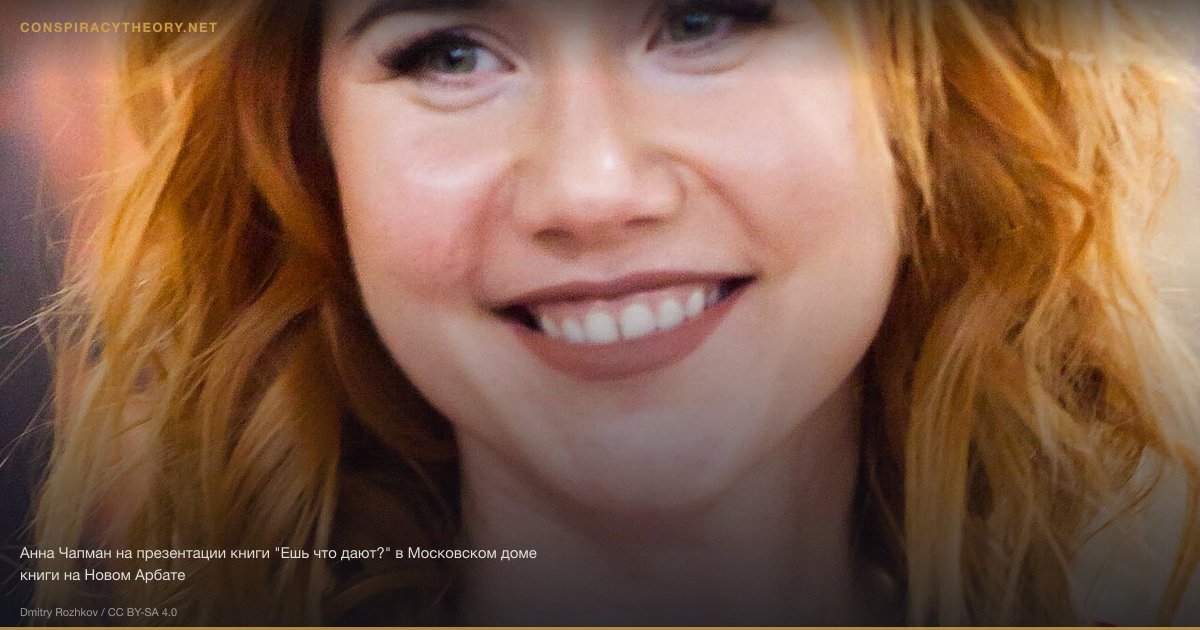
Anna Chapman (born Anna Vasil’yevna Kushchyenko) — A 28-year-old living in Manhattan who ran a real estate startup. Unlike the others, Chapman operated under a name close to her real one (Chapman was her ex-husband’s surname). She was the most visible and least experienced member of the network.
Mikhail Semenko — A young agent working in Arlington, Virginia, who appeared to be a more recent addition to the network.
“Juan Lazaro” and “Vicky Pelaez” (Lazaro’s real name: Mikhail Vasenkov) — Lived in Yonkers, New York. Pelaez was a journalist for a Spanish-language newspaper who may not have initially known about her husband’s intelligence activities. Vasenkov was reportedly one of the most senior agents.
“Michael Zottoli” and “Patricia Mills” (real names: Mikhail Kutsik and Natalia Pereverzeva) — Lived in Arlington, Virginia, as a married couple.
Key Claims
As a confirmed case, all of these were established in court:
- Ten Russian nationals were living in the United States under fabricated identities as part of the SVR’s illegals program
- The FBI monitored the network for approximately a decade through Operation Ghost Stories before making arrests
- The agents used classic Cold War tradecraft — dead drops, invisible ink, shortwave radio, steganography (hiding messages in images on public websites), and exchanges in public parks
- Moscow provided financial support through various channels, including cash buried in rural locations and passed through intermediary contacts
- The agents cultivated contacts in US policy circles, academic institutions, think tanks, and business networks
- The arrests were followed by a spy swap — all ten agents were exchanged for four Western intelligence assets held in Russian prisons
Evidence
FBI Surveillance
The FBI’s Operation Ghost Stories produced an enormous body of evidence:
Communications interception: The Bureau intercepted coded shortwave radio transmissions from Moscow, decoded messages embedded in images on public websites (steganography), and monitored encrypted laptop-to-laptop communications conducted via ad-hoc WiFi networks in cafes and public spaces.
Physical surveillance: FBI agents watched dead drop exchanges, followed agents to meetings with SVR handlers, and documented the use of classic tradecraft including brush passes (quick exchanges while walking past each other) and signal sites (pre-arranged markers left at specific locations).
Financial tracking: The Bureau traced money flows from Moscow to the agents through various channels, including buried caches of cash in upstate New York and transfers through intermediary accounts.
Wiretaps and bugs: FBI surveillance of the agents’ homes captured conversations that made their intelligence affiliations explicit. In one recorded conversation, “Richard Murphy” discussed intelligence tasking from Moscow Center.
The Spy Swap
Twelve days after the arrests, on July 9, 2010, all ten agents pleaded guilty to “conspiracy to act as unregistered agents of a foreign government” — a charge that carried a maximum sentence of five years rather than the life sentence associated with espionage charges. They were immediately deported to Russia.
In exchange, Russia released four individuals convicted of spying for Western intelligence services: Sergei Skripal (who would later survive a nerve agent assassination attempt in Salisbury, England, in 2018), Gennady Vasilenko, Alexander Zaporozhsky, and Igor Sutyagin.
The speed and efficiency of the swap suggested it had been negotiated between Washington and Moscow before the arrests were made public.
What Did They Actually Achieve?
This is the most debated question. By the standards of Aldrich Ames or Robert Hanssen, the illegals ring appears to have produced limited intelligence. No classified documents were obtained. No government agencies were penetrated. The agents cultivated social contacts and provided Moscow with assessments of US political dynamics — information that, cynics noted, could largely be obtained by reading The New York Times.
However, intelligence professionals caution against this dismissal. The network may have been in an early phase of a long-term operation designed to build access gradually over decades. Several agents were making inroads toward contacts in government and policy circles. The “Heathfield” cover — a Harvard Kennedy School graduate working as a strategy consultant — was precisely the kind of legend designed to eventually access high-level contacts.
The decision to arrest when the FBI did may have prevented the network from achieving its true potential.
Cultural Impact
The Chapman case arrived at a moment when US-Russia relations were in a delicate phase of the Obama administration’s “reset” policy. The arrests demonstrated that despite diplomatic warmth, Russian intelligence operations against the United States had never ceased — a fact that would resonate more loudly after Russia’s 2014 annexation of Crimea and 2016 election interference.
Anna Chapman became the most famous aspect of the case, largely because of her appearance. Photogenic and active on social media before her arrest, she became a celebrity in Russia after the swap — modeling, hosting a television show, and becoming a public spokesperson for Russian intelligence. Her fame somewhat obscured the more operationally significant members of the network.
The case also raised profound questions about identity. The Bezrukov/Vavilova children — born in Canada, raised as Americans, completely unaware of their parents’ true identities — learned overnight that their entire family history was fiction. This human dimension of the case inspired direct adaptations in entertainment.
In Popular Culture
- The Americans (2013-2018) — FX series starring Keri Russell and Matthew Rhys as KGB illegals living as Americans in 1980s Washington, D.C.; directly inspired by the Chapman case
- Red Sparrow (2018) — Film starring Jennifer Lawrence as a Russian intelligence agent; drew on themes from the illegals program
- Numerous documentaries — The case has been featured in 60 Minutes, BBC Panorama, and multiple espionage documentary series
- Deep Undercover (2018) — Book by Jack Barsky, a former KGB illegal who lived in the US for a decade, providing context for the illegals program
Key Figures
- Anna Chapman (1982-) — Most publicly visible member of the ring; became a Russian celebrity after the spy swap
- Andrey Bezrukov / “Donald Heathfield” — Harvard-educated deep cover agent; one of the most successfully embedded illegals
- Elena Vavilova / “Tracey Foley” — Bezrukov’s wife and fellow illegal; co-author of a post-swap memoir
- Colonel Alexander Poteyev — SVR officer believed to have betrayed the network to the FBI; reportedly fled Russia before the arrests; sentenced in absentia to 25 years
- Sergei Skripal — One of four Western assets traded for the ten illegals; survived a 2018 nerve agent attack in Salisbury, England, attributed to Russian intelligence
Timeline
| Date | Event |
|---|---|
| Late 1990s-2000s | SVR agents arrive in the United States under fabricated identities at various times |
| ~2000 | FBI learns of the network (reportedly from a Russian defector); launches Operation Ghost Stories |
| 2000-2010 | FBI monitors the network for approximately a decade, collecting evidence |
| 2006 | Anna Chapman arrives in New York, begins building real estate business |
| June 26, 2010 | Chapman meets an FBI undercover agent posing as a Russian handler; accepts a fake passport for delivery |
| June 27, 2010 | FBI arrests all 10 agents in coordinated operation across northeastern US |
| June 28, 2010 | An 11th suspect, Christopher Metsos, is arrested in Cyprus but jumps bail and disappears |
| July 8, 2010 | All 10 agents plead guilty to conspiracy charges |
| July 9, 2010 | Spy swap conducted at Vienna airport: 10 illegals exchanged for 4 Western intelligence assets |
| Post-2010 | Chapman becomes Russian celebrity; Bezrukov/Vavilova become advisors to Russian corporations |
| 2013 | FX series The Americans premieres, inspired by the case |
| 2018 | Sergei Skripal (one of the swapped assets) survives nerve agent attack in Salisbury, England |
Sources & Further Reading
- Wise, David. Tiger Trap: America’s Secret Spy War with China. Houghton Mifflin Harcourt, 2011. (Includes significant coverage of the illegals case.)
- U.S. Department of Justice. “Ten Alleged Secret Agents Arrested in the United States.” Press Release, June 28, 2010.
- Corera, Gordon. Russians Among Us: Sleeper Cells, Ghost Stories, and the Hunt for Putin’s Spies. William Morrow, 2020.
- FBI. “Operation Ghost Stories: Inside the Russian Spy Case.” FBI.gov, 2011.
- Barsky, Jack. Deep Undercover: My Secret Life and Tangled Allegiances as a KGB Spy in America. Tyndale House, 2017.
- Hoffman, David. The Billion Dollar Spy. Doubleday, 2015.
- Vavilova, Elena, and Andrey Bezrukov. Invisibles (memoir). Published in Russian, 2019.
Related Theories
- Aldrich Ames — CIA’s Deadliest Mole — An earlier confirmed case of Russian espionage within American intelligence
- Robert Hanssen — FBI Spy — Another confirmed case of a senior American intelligence official working for Russia
Frequently Asked Questions
What was the Russian illegals program?
Who was Anna Chapman?
What intelligence did the Russian spy ring actually gather?
How were the Russian sleeper agents caught?
Infographic
Share this visual summary. Right-click to save.
