Academy at Swift River — CEDU's East Coast Campus
Overview
Drive west from Boston for two and a half hours, past Springfield, past the Connecticut River, deep into the hill towns of western Massachusetts where the Berkshires start to rise and cell service becomes a memory, and you’ll find the town of Cummington. Population roughly eight hundred. One general store. A post office. Forest in every direction. It’s the kind of place where a teenager could scream and nobody outside the property would hear it.
This is where the Academy at Swift River operated from the 1990s until 2009 — the east coast outpost of the CEDU network, a chain of “emotional growth boarding schools” whose methods traced directly back to the Synanon cult. While CEDU’s flagship campus sat in the San Bernardino Mountains of California and its crown jewel, Rocky Mountain Academy, occupied a remote valley in the Idaho panhandle, Swift River served a specific strategic purpose: it brought Synanon-derived psychological techniques within driving distance of the wealthiest zip codes on the eastern seaboard. Greenwich, Connecticut. Westchester County. The Main Line outside Philadelphia. Families in those communities didn’t need to ship their children across the country anymore. They could drive them to Massachusetts.
The school was not cheap. Tuition ran between $50,000 and $70,000 per year — comparable to the most elite prep schools in New England — and the product being sold was not education in any traditional sense. It was transformation. Specifically, the kind of transformation that comes from marathon confrontation sessions derived from a cult’s attack therapy, applied to adolescents in an isolated rural setting where the nearest meaningful authority was an hour away on winding two-lane roads. Swift River dressed this up in the language of prestigious New England boarding schools: rolling campus, academic rigor, personal growth. But beneath the brochure copy, the machinery was the same as at every CEDU campus. Raps. Propheets. Isolation. Control. The troubled teen industry’s standard operating procedure, transplanted to the Berkshires and sold at a premium.
Origins and History
The CEDU Expansion
The Academy at Swift River did not emerge in isolation. It was a product of CEDU’s aggressive expansion during the late 1980s and 1990s, a period when the network was riding high on referrals from educational consultants and the apparently inexhaustible willingness of affluent parents to spend almost anything to fix their struggling teenagers.
CEDU had started in 1967 as a single school in Running Springs, California, founded by Mel Wasserman — a former furniture salesman with no clinical credentials who had experienced Synanon’s confrontational “Game” sessions and decided they could be adapted for use with adolescents. The original campus had proved the model: charge boarding school tuition, apply cult-derived psychological techniques, keep the kids isolated enough that they can’t tell anyone what’s happening, and collect the checks. Rocky Mountain Academy, opened in 1984 in Bonners Ferry, Idaho, proved it could scale. Now Wasserman wanted the east coast.
The logic was straightforward. CEDU’s customer base was overwhelmingly affluent. Upper-middle-class and wealthy families, often on the coasts, who were willing to pay extraordinary sums for a program that promised to save their children from drugs, defiance, academic failure, or whatever constellation of adolescent behavior had driven them to desperation. The California and Idaho campuses drew from the west coast and interior, but east coast families faced a logistical barrier: sending a child three thousand miles away felt extreme, even for parents who had already decided that removing their child from home was the answer. An east coast campus would lower that barrier. It would be a shorter flight for parent visits. It would feel less like exile and more like boarding school.
The Cummington Campus
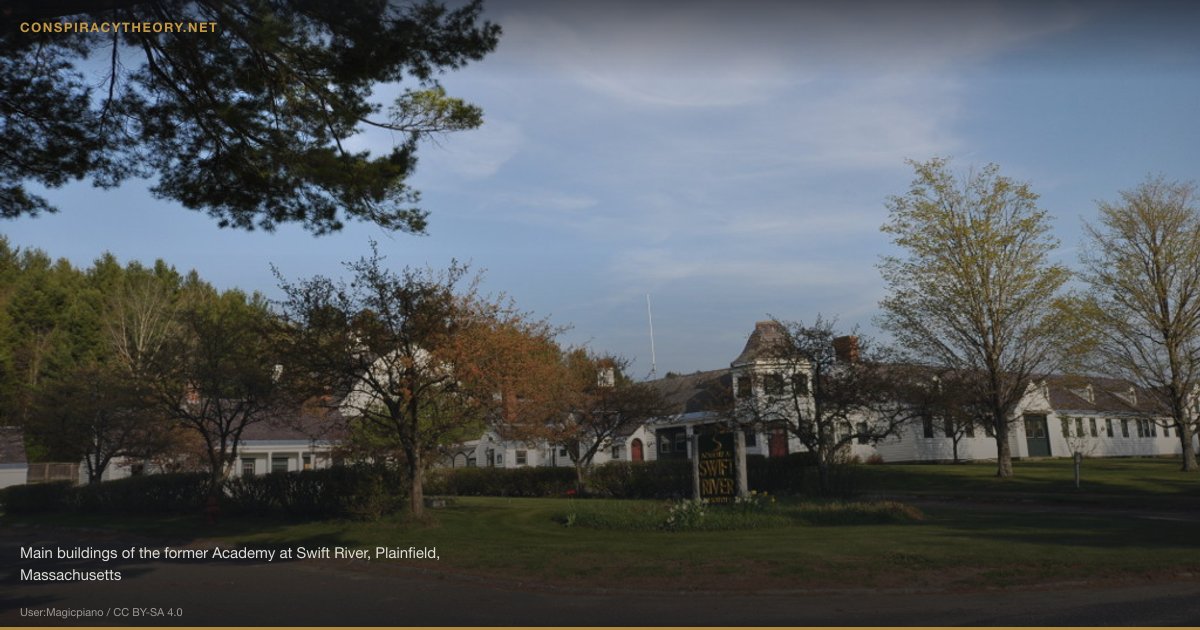
The property selected for Swift River was a former estate in the hill towns west of the Connecticut River — rural New England at its most picturesque and its most isolated. The campus was converted from existing buildings, set on rolling acreage surrounded by forest, with the kind of stone walls and converted barns that looked wonderful in marketing materials. It was, in its physical appearance, everything CEDU’s branding wanted to project: a distinguished New England boarding school campus where troubled kids could get back on track in a supportive environment.
The isolation was, as with every CEDU campus, the point. Cummington is not a place you stumble upon. There’s no commercial airport within easy reach. The nearest city of any size, Northampton, is a thirty-minute drive through winding hill roads. For a teenager with no car, no money, no phone, and no idea how to navigate rural western Massachusetts, running away was theoretically possible but practically futile. This was a design feature inherited from CEDU’s institutional DNA — the original Running Springs campus sat at six thousand feet in the San Bernardino Mountains, and Rocky Mountain Academy was in the Idaho wilderness. Physical isolation served the same function as the communication restrictions and information control: it ensured that what happened inside the program stayed inside the program.
Swift River opened in the 1990s and quickly established itself as the CEDU network’s east coast presence. Enrollment was driven primarily through the educational consultant pipeline — a network of independent consultants who, for fees paid by parents, assessed struggling teenagers and recommended placement in specific programs. The consultant industry was (and remains) largely unregulated, and the financial relationships between consultants and the programs they recommended were often opaque. Consultants who referred students to Swift River had visited the campus, attended marketing presentations, and in many cases developed professional relationships with Swift River staff that created obvious incentive problems. A consultant whose referral resulted in an enrollment was building a relationship that would generate future referrals. This was not a system designed to prioritize the interests of the child being placed.
Corporate Ownership
Swift River’s corporate lineage followed the same trajectory as the rest of the CEDU network. In 1998, Mel Wasserman sold the CEDU schools to Brown Schools, Inc., a Texas-based company that operated residential treatment facilities. Brown Schools took on the network as a portfolio of revenue-generating assets. Then, in 2003, Universal Health Services (UHS) — a Fortune 500 for-profit healthcare corporation headquartered in King of Prussia, Pennsylvania, with billions in annual revenue — acquired Brown Schools and everything in it.
Under UHS ownership, Swift River was no longer the passion project of a true believer in Synanon-derived emotional growth. It was a line item on a corporate balance sheet, evaluated by the same metrics applied to UHS’s psychiatric hospitals and behavioral health centers: occupancy rates, revenue per bed, operating margins. Former staff at CEDU campuses have described the UHS era as a time of cost-cutting, reduced staffing ratios, and institutional pressure to maintain enrollment regardless of whether individual students were appropriate candidates for the program. The ideological fervor of CEDU’s early years — misguided as it was — was replaced by something arguably worse: indifference. The methods remained, but the mission had been subordinated to quarterly earnings.
Mel Wasserman himself died by suicide in 2002, reportedly despondent over the mounting allegations and lawsuits that had begun to engulf the network he built. His death left the CEDU schools in the hands of people who had purchased them as business assets, not as a cause.
The Methods
Raps at Swift River
Swift River employed the same core methodology as every other CEDU campus, because the methodology was the product. At the center of it were the raps — group confrontation sessions directly descended from Synanon’s “Game.”
A rap at Swift River worked like this: students sat in a group, typically facilitated by one or two staff members. A student was selected — or “indicted,” in the program’s language — and the group was directed to confront that student about their behavior, their attitudes, their perceived dishonesty, their resistance to the program. The confrontation was not gentle. Students screamed at one another. They were encouraged to “get real,” which meant abandoning any composure, any boundary, any instinct toward self-protection. Staff facilitators managed the emotional temperature of the room, escalating when a student seemed to be maintaining their defenses, easing off strategically to create moments of apparent safety before ramping the pressure up again.
Raps could last hours. Students were not allowed to leave. They were not allowed to sit silently. Refusal to participate was itself a violation that would be addressed — either in the current rap or in the next one. Anything a student revealed in a rap — trauma, fear, family secrets, sexual history — was available as material for future confrontations. Vulnerability was not protected; it was catalogued and weaponized. The system taught students that emotional honesty meant total exposure, and that any attempt to maintain privacy was evidence of pathological resistance.
Propheets
The propheets — CEDU’s signature multi-day emotional marathon sessions — were conducted at Swift River using the same structure and sequence as at other CEDU campuses. These were not casual group therapy exercises. They were extended psychological operations lasting twenty-four to forty-eight hours, involving sleep deprivation, guided imagery, emotional confrontation, specific music played at choreographed moments, and a deliberate arc designed to break down psychological resistance and produce a cathartic emotional crisis.
Each propheet had a name and a theme. Students progressed through the propheet sequence as they advanced through the program’s level system. The sessions were conducted in controlled environments — darkened rooms, specific physical arrangements — and followed scripts refined over decades since Wasserman first adapted Synanon’s methods in the late 1960s. The techniques bore the hallmarks of coercive persuasion as described by scholars like Robert Lifton and Margaret Singer: isolation from outside support, sleep deprivation, emotional exhaustion, alternation of harshness and apparent kindness, forced confessions, and the manufacture of intense group bonding through shared ordeal.
Former Swift River students describe the propheets in terms consistent with accounts from every other CEDU campus. The specific songs. The specific guided imagery exercises. The overwhelming emotional intensity produced by dozens of hours without sleep combined with relentless psychological pressure. And the aftermath — the manufactured euphoria of having “survived” the experience, the trauma bonding with other students who went through it, and, for many, the lasting psychological damage that only became fully apparent years later.
Isolation and the Level System
Swift River maintained the same comprehensive control over students’ lives that characterized the entire CEDU network. Contact with family was restricted to monitored phone calls and censored mail. Students had no access to outside media — no television, no internet, no newspapers. They had no money, no transportation, and no means of independent communication. For all practical purposes, they were in a closed system, receiving information only through the program’s own filters.
The level system — a hierarchical structure in which students advanced by demonstrating compliance with the program’s expectations — created powerful internal incentives. Higher levels brought privileges: more phone time, greater freedom of movement, eventually supervised outings. Lower levels meant tighter restrictions. Advancement was determined by staff assessment, which in practice meant that students who bought into the program’s worldview and participated enthusiastically in raps and propheets moved up, while students who resisted or questioned the methods were held back or demoted. Upper-level students served as enforcers, reporting on lower-level students and leading confrontations — a peer surveillance system inherited directly from Synanon’s organizational structure.
Key Claims
The allegations against the Academy at Swift River are part of the documented record of abuse within the CEDU network. They are not speculative:
- Swift River used Synanon-derived confrontational techniques on minors without informed consent and without clinical oversight appropriate to the intensity of the interventions.
- The rap and propheet sessions constituted coercive psychological practices applied to adolescents, including the use of sleep deprivation, emotional manipulation, and forced disclosure of traumatic material.
- Students were systematically isolated from family contact, outside information, and any independent support system that might have provided a check on the program’s authority.
- The school operated in a regulatory gray area, not fully subject to the oversight frameworks that applied to licensed mental health facilities, schools, or juvenile programs.
- Tuition of $50,000-$70,000 per year was charged for a program whose core methods derived from a recognized cult and whose staff frequently lacked appropriate clinical credentials.
- Corporate ownership under Brown Schools and then UHS prioritized financial performance over student welfare.
- The educational consultant referral pipeline created financial incentives that compromised the independence of placement recommendations.
- Students who attempted to report abuse or dissatisfaction were confronted within the program’s disciplinary structure and treated as exhibiting pathological resistance to treatment.
- Some students were transferred between Swift River and other CEDU campuses, demonstrating the network’s integrated operational structure and exposing students to institutional abuse across multiple facilities.
Evidence
Survivor Accounts
Former Swift River students have provided accounts of their experiences consistent with the patterns documented at every other CEDU campus. These accounts, initially shared through early internet forums and survivor message boards in the late 1990s and 2000s, describe the same methods — the same raps, the same propheet structures, the same isolation and control techniques — detailed by survivors of CEDU Running Springs and Rocky Mountain Academy. The consistency of these accounts across campuses and across years of operation is itself evidence: students who never knew each other, who attended Swift River in different years, describe the same procedures, the same staff behaviors, the same institutional culture.
Many former Swift River students report lasting psychological effects including post-traumatic stress disorder, difficulty with trust, anxiety triggered by group settings or specific music associated with propheet sessions, and a complicated relationship with the concept of therapy itself. For students who were sent to Swift River as teenagers and subjected to techniques they did not consent to, the experience of being told that psychological coercion was “therapy” created a lasting confusion between help and harm that has made it difficult for some to seek legitimate mental health treatment as adults.
The Closure Pattern
Swift River closed in 2009, part of the wave of CEDU campus closures that swept through the network in the mid-to-late 2000s. The original CEDU campus in Running Springs had closed in 2005. Other affiliated campuses closed or rebranded around the same period. The proximate causes were multiple: declining enrollment as negative information about CEDU’s methods spread through the internet and survivor advocacy, increasing legal liability from abuse lawsuits, the 2008 financial crisis which constrained the ability of even affluent families to pay $50,000+ per year in tuition, and corporate decisions by UHS to shed underperforming assets.
The closure was not accompanied by any public investigation, official report, or institutional accounting of what had occurred on the Cummington campus during its years of operation. Like every other CEDU closure, Swift River simply ceased to exist. Records were absorbed into corporate archives. Staff dispersed — some into other programs in the troubled teen industry, carrying CEDU’s methods with them into new institutional settings. No government entity produced a comprehensive public report. The institution disappeared, but the harm it inflicted remained with the people who had been subjected to its methods as children.
Regulatory Gaps
Massachusetts, like most states, lacked a regulatory framework adequate to oversee a program like Swift River. The school was not a licensed psychiatric facility. It was not a traditional school subject to standard educational oversight. It was not a juvenile detention center. It existed in the gap between these categories — a gap that the troubled teen industry exploited systematically across the United States. This regulatory ambiguity was not an accident or an oversight. It was a business model. By operating in the space between recognized institutional categories, programs like Swift River avoided the oversight requirements — staff credentialing, reporting obligations, inspection protocols — that would have applied to any single category of institution performing comparable functions.
Cultural Impact
The East Coast Pipeline
Swift River’s specific significance within the CEDU network — and within the broader troubled teen industry — was geographic. Before Swift River, east coast families who were steered toward CEDU by educational consultants faced a choice that felt drastic: send a teenager to the mountains of California or the wilderness of Idaho. Some families balked. The distance felt punitive, the isolation extreme. Swift River solved that problem. A campus in the Berkshires, a few hours from New York or Boston, felt like boarding school. Parents could visit more easily. The marketing could lean into New England prep school aesthetics — stone walls, autumn foliage, academic tradition — rather than the frontier isolation of the western campuses.
This geographic positioning made Swift River a gateway drug, of sorts, for the east coast troubled teen pipeline. Families who might not have sent their children to Idaho could be persuaded to try Massachusetts. Once a student was enrolled, the same methods applied regardless of which state the campus occupied. The raps were the same. The propheets were the same. The isolation was the same. Only the scenery differed.
Survivor Organizing
Swift River survivors have been part of the broader CEDU survivor community that has become one of the most organized advocacy movements within the troubled teen industry reform space. Former students have shared their accounts publicly, contributed to journalistic investigations, and connected with survivors of other CEDU campuses to build a comprehensive picture of institutional abuse across the network.
The internet was transformative for Swift River survivors, as it was for CEDU survivors generally. Students who had been told they were the only ones who struggled with the program — who had been told that their negative reactions were evidence of their own pathology, not evidence of institutional abuse — discovered online that hundreds of others shared nearly identical experiences. This discovery — that the problem was the system, not the individual — was, for many former students, the beginning of understanding what had been done to them.
The Industry That Survived
Swift River is closed. CEDU is closed. But the troubled teen industry that CEDU helped build is not. Programs using similar methods — confrontational group therapy, isolation from family, level systems based on compliance, wilderness exposure, removal of communication rights — continue to operate across the United States. Some were founded by former CEDU staff. Others adopted CEDU’s methods independently or through the diffusion of techniques across an industry that shares personnel, consulting relationships, and referral networks. The pipeline that Synanon built, that CEDU commercialized, and that Swift River brought to the east coast is still operational. The brand names change. The methods endure.
Timeline
- 1958 — Charles E. Dederich founds Synanon in Santa Monica, California, introducing the confrontational “Game” method that would eventually reach thousands of teenagers through CEDU and its offspring.
- 1967 — Mel Wasserman founds the original CEDU school in Running Springs, California, adapting Synanon’s methods for use with adolescents.
- 1984 — Rocky Mountain Academy opens in Bonners Ferry, Idaho, expanding the CEDU network westward into the mountain states.
- 1990s — The Academy at Swift River opens in Cummington, Massachusetts, becoming CEDU’s east coast campus. The school markets itself to affluent families from New York, Boston, Philadelphia, and other eastern metropolitan areas.
- 1998 — Mel Wasserman sells the CEDU network, including Swift River, to Brown Schools, Inc., a Texas-based operator of residential treatment facilities.
- 2002 — Mel Wasserman dies by suicide amid mounting abuse allegations and lawsuits against the schools he founded.
- 2003 — Universal Health Services (UHS) acquires Brown Schools and the entire CEDU network, placing Swift River and its sister campuses under corporate healthcare management.
- 2005 — CEDU’s original Running Springs campus closes permanently, beginning the collapse of the network.
- 2008 — The financial crisis constrains families’ ability to pay Swift River’s $50,000-$70,000 annual tuition, accelerating enrollment decline.
- 2009 — The Academy at Swift River closes. The Cummington campus ceases operations, and no public accounting of conditions during its years of operation is produced.
- 2010s–2020s — Former Swift River students participate in broader CEDU survivor advocacy, contributing testimony to journalistic investigations and legislative efforts to regulate the troubled teen industry.
Sources and Further Reading
- Maia Szalavitz, Help at Any Cost: How the Troubled-Teen Industry Cons Parents and Hurts Kids (Riverhead Books, 2006) — the most comprehensive journalistic investigation of the troubled teen industry, with extensive coverage of CEDU’s methods and their spread across the network’s campuses.
- Kenneth R. Wooden, Weeping in the Playtime of Others: America’s Incarcerated Children (McGraw-Hill, 1976; updated edition Ohio State University Press, 2000) — foundational documentation of institutional abuse of minors in American residential programs.
- Robert Jay Lifton, Thought Reform and the Psychology of Totalism (University of North Carolina Press, 1989) — academic study of coercive persuasion techniques directly applicable to understanding CEDU’s Synanon-derived methodology.
- Government Accountability Office (GAO), Residential Treatment Programs: Concerns Regarding Abuse and Death in Certain Programs for Troubled Youth (2007) — federal report documenting systemic abuse in residential programs for minors.
- HEAL (Human Earth Animal Liberation) Online — survivor-run database documenting abuse at CEDU campuses including Swift River.
- CEDU/RMA survivor community archives — online collections of firsthand accounts from former students across all CEDU campuses, including Swift River.
- Breaking Code Silence — advocacy organization founded by troubled teen industry survivors, amplifying accounts from programs including CEDU-affiliated schools.
Related Theories
The Academy at Swift River was one campus within a larger system of institutional abuse. Understanding it requires understanding that system:
- CEDU Schools — the parent network whose Synanon-derived methods Swift River employed. Every method used at Swift River — raps, propheets, isolation, level systems — originated in CEDU’s founding campus in Running Springs, California.
- Synanon — the cult whose confrontational “Game” technique was the original source code for everything CEDU built. Swift River’s methods were Synanon’s methods, filtered through three decades of adaptation but never fundamentally changed.
- The Troubled Teen Industry — the broader multi-billion-dollar ecosystem of residential programs, wilderness programs, and therapeutic boarding schools in which Swift River operated. The industry remains largely unregulated despite decades of documented abuse across hundreds of programs.
Swift River is gone. The campus in Cummington has returned to being what it was before CEDU found it — a piece of rural New England real estate, unremarkable and quiet. But the teenagers who were sent there carry the experience with them. The raps. The propheets. The months or years spent in a closed system where every instinct toward self-protection was reframed as pathology, where vulnerability was mandatory and privacy was forbidden, where the adults in charge wielded techniques designed by a cult leader and refined by a furniture salesman and administered under the auspices of a Fortune 500 healthcare corporation. That’s the story of the Academy at Swift River. Not a conspiracy theory in the speculative sense — a confirmed institutional reality, documented and closed, its harm still echoing through the lives of the people who were children when it was done to them.
Frequently Asked Questions
What was the Academy at Swift River?
Why did the Academy at Swift River close?
How was Swift River different from other CEDU schools?

Infographic
Share this visual summary. Right-click to save.
